Sewer or Stormwater? Why Connecting the Wrong One Is a Problem
Every Melbourne property has two completely separate drainage systems running under it, and they are never meant to meet. One carries wastewater to a treatment plant. The other carries rain to a waterway. Joining them is illegal, and it happens far more often than most owners would guess.
The usual version is a downpipe feeding into the sewer. It causes no trouble at all until the first heavy storm, at which point it causes trouble for you and for everyone downstream of you.
1 in 3
Properties with a problem, in one Victorian town inspected by its water authority
$180k
Annual cost of illegal stormwater connections to one regional authority alone
Critical
How building inspectors rate the defect when they find it
You Have Two Separate Systems
The sanitary drain takes everything from your toilets, basins, showers, kitchen and laundry. It runs to your water retailer’s sewer main and from there to a treatment plant, where it is processed before being released.
The stormwater drain takes rain. Roof water through the downpipes, surface water from paving and driveways, and in many properties a sub-soil line as well. It runs to the street, into the council or Melbourne Water system, and ultimately into a creek, a river or the bay, with little or no treatment.
Those different destinations are the entire reason the systems are separate. One is built to handle contamination and a steady daily flow. The other is built to handle enormous volumes very quickly and treats nothing. Neither can do the other’s job.
What Goes Where
Swipe the table to see more →
| Source | Correct system | Why |
|---|---|---|
| Toilets, basins, showers, baths | Sewer | Needs treatment before release |
| Kitchen sink and dishwasher | Sewer | Food waste, fats and detergents |
| Laundry trough and washing machine | Sewer | Detergents and lint |
| Roof downpipes | Stormwater | Clean rain, and very high volume in a storm |
| Driveway, paving and surface drains | Stormwater | Surface runoff, high volume |
| Sub-soil and agricultural drains | Stormwater | Groundwater, not wastewater |
| Rainwater tank overflow | Stormwater | Still rain, just delayed |
| Air conditioner condensate | Depends | Varies with the install and the retailer. Ask rather than assume |
How a Wrong Connection Happens
Almost nobody does this deliberately. Three situations account for most of what gets found.
The Renovation Shortcut
The most common cause. Someone adds a downpipe, a deck drain or a new paved area, looks for somewhere for the water to go, and ties it into the nearest accessible drain. Under the ground, a sanitary drain and a stormwater drain look much the same.
It passes inspection because nobody inspects it. The work is done, the ground goes back, and the connection is invisible until something goes wrong years later.
The Historic Connection
Plenty of these predate the compliance regime entirely. On older Melbourne properties a connection may have been made when standards and enforcement were different, and it has simply been sitting there ever since, through several owners who had no reason to suspect it.
This is why the problem surfaces so often during pre-purchase inspections. The current owner is genuinely unaware, and it becomes the buyer’s problem the moment they sign. Our guide on getting the drains checked before buying an older home covers what that inspection picks up.
The Collapsed or Modified Pit
The third version is not a deliberate connection at all. A pit collapses, or is modified during landscaping, and stormwater starts finding its way into a shared trench and then into the sanitary line.
These are the hardest to find, because there is no tie-in to discover. The water is simply going somewhere it should not, and only a test will show where.
The Warning Signs
A wrong connection is silent in dry weather. Everything you would notice happens when it rains, which is exactly why the connection between cause and symptom gets missed.
- Sewer odour from a gully or floor waste during or after heavy rain. The clearest sign, and the one most often blamed on something else.
- A gully trap that overflows during storm events but behaves normally the rest of the year.
- Drains that gurgle or back up only in heavy rain. A blockage does not care about the weather. Stormwater in the sewer does.
- Waste water surfacing outside after a downpour when the system handles ordinary daily use without complaint.
- Repeated sewer problems that cluster in winter and clear up over summer.
- A letter from your water retailer asking about stormwater on your property. They do go looking, as the next section explains.
If you are getting sewer smell indoors with no weather pattern to it, that is a different problem with a different list of causes. See our guide to sewer smell in the house for that one.
Why It Matters More Than It Sounds
What Happens to the Sewer
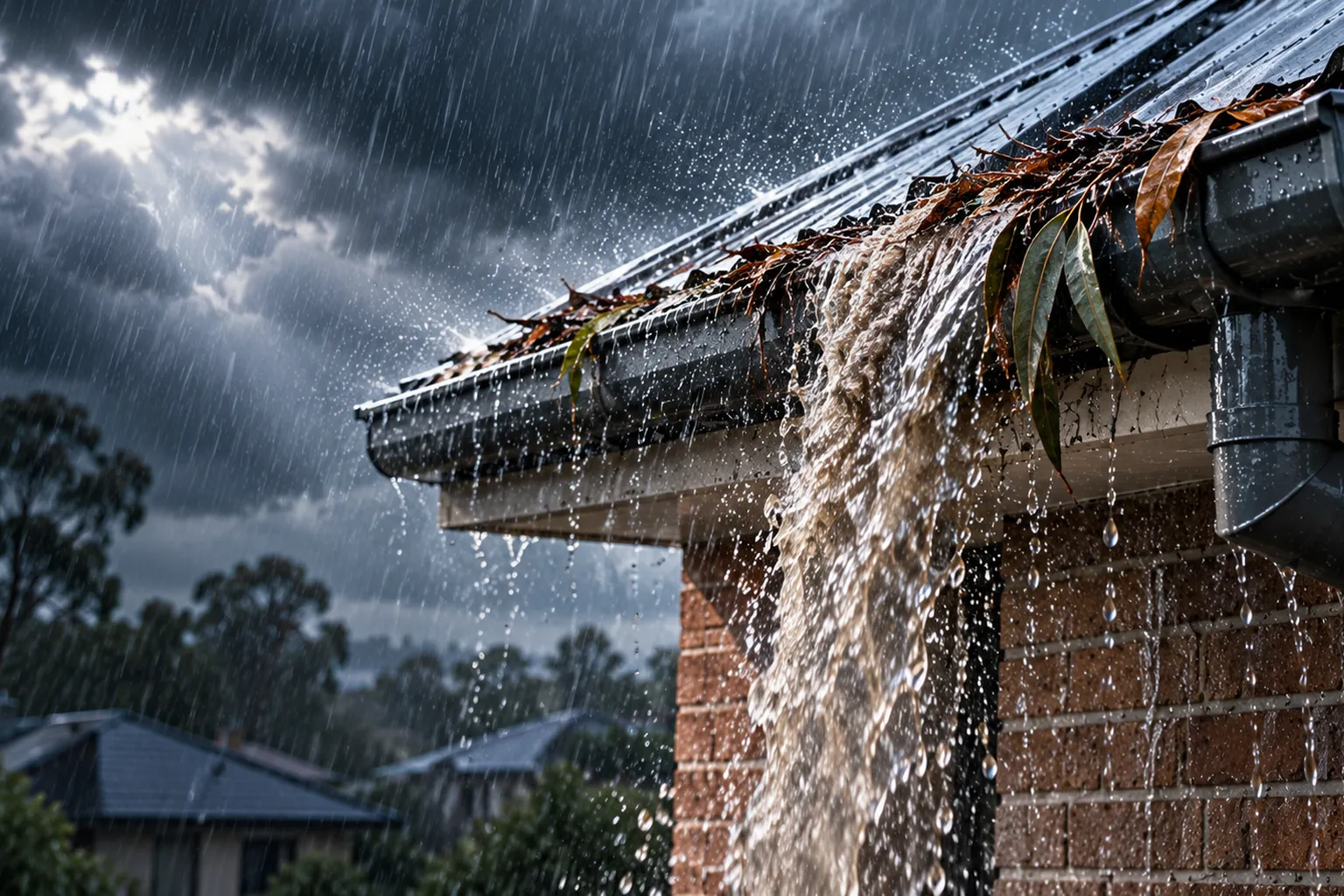
Rain arrives in volumes that daily wastewater never approaches. A single roof can deliver more water in an hour of heavy rain than the household produces in a week.
All of that then has to be treated at a wastewater plant, which it was never sized for. Victorian water authorities describe the consequences plainly: it strains pump stations, raises operating costs and increases greenhouse gas emissions, and it increases the risk of blockages and sewage spills during heavy rain. One regional authority puts the cost to it at around $180,000 a year.
Multiply a few hundred wrong connections across a catchment and the sewer main simply cannot carry what arrives. That is when it surcharges, and the overflow has to go somewhere.
What Happens to Your House
This is the part that makes it your problem rather than an abstract environmental one.
When heavy rain surcharges the sewer main, sewage can back up into properties through floor wastes and gully traps. Your overflow relief gully exists precisely to make that surface outside rather than in your bathroom, which is why its condition matters so much. If the riser is buried or the grate is missing, that protection is gone.
Owners can also face penalties from the water authority for the connection itself, and the rectification cost is the owner’s regardless of who made the connection or how long ago.
How Common Is It?
More common than almost anyone expects, and we have real numbers rather than an impression.
One Victorian water authority ran a targeted inspection program using smoke testing. Over about ten months it inspected 1,100 properties in a single town and found more than 350 with problems. That is close to one property in three.
There is no reason to think Melbourne is dramatically better. The housing stock is older, there have been far more renovations, and the same incentives applied to whoever was looking for somewhere to put a downpipe.
Building inspectors rate stormwater connected to the sewer as a critical defect when they find it, which tells you how seriously the industry treats it.
How It Gets Confirmed
You cannot settle this by looking. Three methods actually prove it, and which one suits depends on what you are trying to establish.
Dye test. Dye is introduced into the stormwater system and the sanitary drain is watched for colour. Simple, cheap, and conclusive when it shows up.
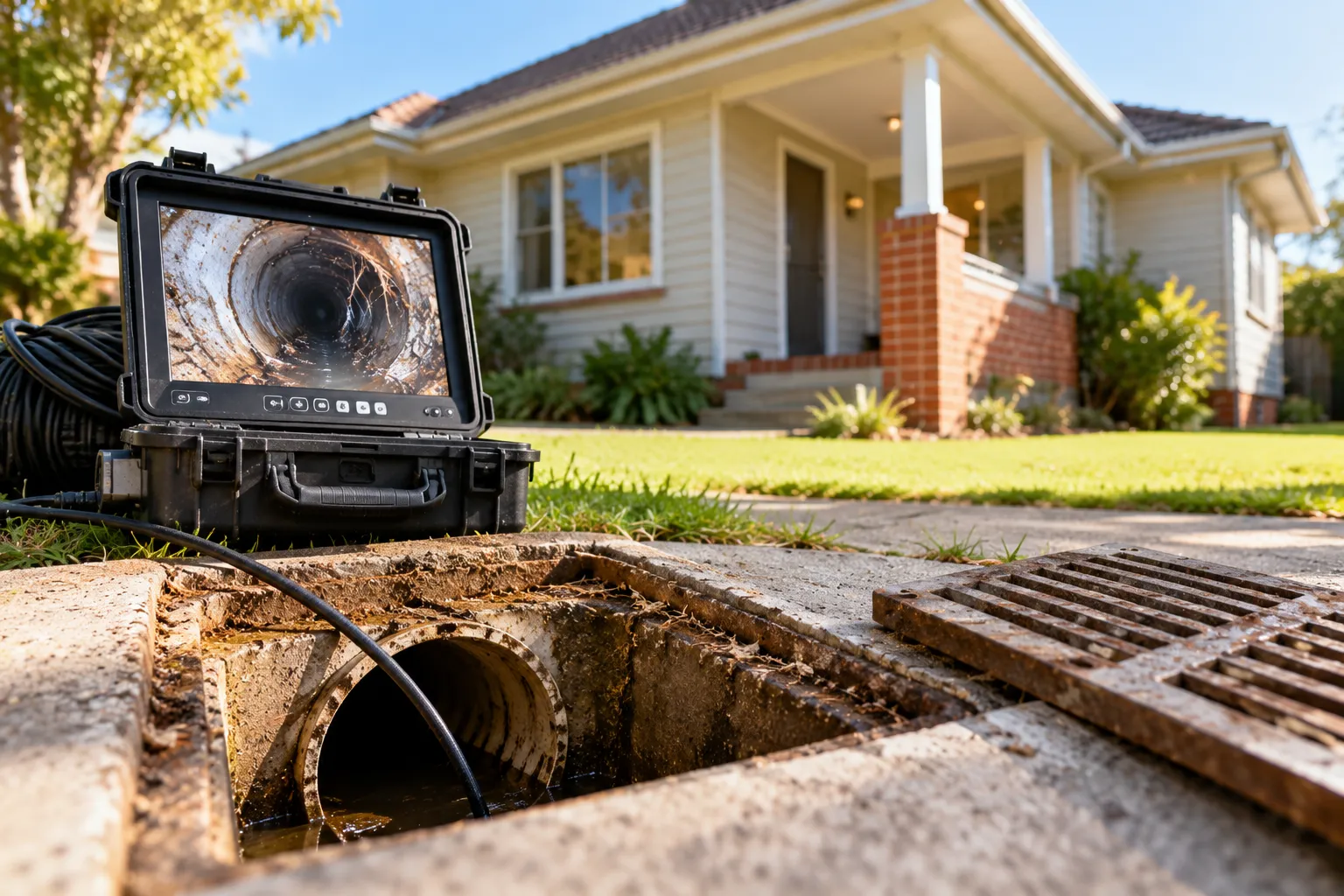
CCTV drain camera. Traces the line and shows the actual tie-in, which tells you where to dig rather than just that a problem exists.
Smoke test. Non-hazardous white smoke is introduced into the sewer and watched for where it escapes. This is the method water authorities use across whole streets.
For a single property, a dye test tells you whether you have a problem and a camera tells you where it is. Both usually happen in the same visit, because knowing you have a wrong connection without knowing where it is does not get you much closer to fixing it. That is standard drain investigation work.
Fixing It
The rectification is straightforward in principle. A licensed plumber disconnects the stormwater tie-in and reinstates a legal point of discharge, so the rain goes where it should.
Two things get done alongside that. The sewer line is inspected and cleaned where solids may have been displaced by the extra flow, because years of stormwater surging through can leave the line in a different state than it started. And where required, the water authority is notified.
Keep the rectification paperwork. If the authority has written to you, they will want evidence. If you sell, a buyer’s inspector may find the historic evidence of a connection and you want to be able to show it was dealt with properly.
Cost comes down to access and depth, as it does with all drainage work. A downpipe tie-in near the surface is a short job. A connection under a driveway is a considerably bigger one, and where the drain itself is in poor condition, pipe relining may be part of the answer rather than open excavation.
Talk to a Licensed Plumber in Melbourne
If your drains only misbehave when it rains, or your water retailer has written to you about stormwater, a dye test and a camera run will tell you what you are dealing with. Plumb Construct is licensed, works across Melbourne, and can carry out the rectification and the paperwork rather than just confirming the problem exists.
📞 0424 932 737
📧 [email protected]
📍 Melbourne, VIC
📩 Request a Quote: Contact Page
Related Plumbing Services
Frequently Asked Questions About Sewer and Stormwater Connections
What is the difference between sewer and stormwater?
The sanitary sewer takes wastewater from toilets, basins, showers, the kitchen and the laundry, and carries it to a treatment plant. Stormwater takes rain from downpipes, paving and sub-soil drains and carries it to a creek, river or bay with little or no treatment. They are separate because one is built for contamination at a steady flow and the other for enormous volumes very quickly.
Can I connect my downpipe to the sewer?
No. Connecting stormwater to the sanitary sewer is an illegal cross-connection, and building inspectors rate it as a critical defect. It is the most common version of the problem, usually created by someone adding a downpipe and tying it into the nearest accessible drain. Roof water has to go to the stormwater system.
How do I know if my stormwater is connected to the sewer?
The symptoms only appear in wet weather. Watch for sewer odour from a gully or floor waste during or after heavy rain, a gully trap that overflows in storms but is fine otherwise, or drains that gurgle and back up only when it rains. Confirmation needs a dye test, which introduces dye into the stormwater and watches the sanitary drain for colour, usually combined with a CCTV camera run to find the tie-in.
Who pays to fix an illegal stormwater connection?
The property owner, regardless of who made the connection or how long ago it was done. That includes connections made by previous owners and ones that predate current compliance requirements. Owners can also face penalties from the water authority for the connection itself, which is one reason a pre-purchase drain inspection is worth doing before you own the problem.
Why does my drain only smell or back up when it rains?
That weather pattern is the signature of stormwater entering the sanitary drain. A blockage behaves the same in any weather, so symptoms that appear only in heavy rain point to extra volume arriving from somewhere it should not. It can also mean the sewer main in your street is surcharging because of other properties’ connections, which is worth reporting to your retailer either way.
Explore More
- All Posts
- Business & Specialty
- Costs & Guides
- Emergencies
- Fixes & Repairs
- public