Banging or Noisy Pipes? What Water Hammer Means and How to Fix It
Table of Contents
- What Water Hammer Actually Is
- The Two Different Sounds and What Each Means
- Why It Started After a New Appliance Was Installed
- Is Your Water Pressure Above the Legal Limit?
- How to Check Your Own Water Pressure
- What Actually Fixes Water Hammer
- Why Fixing Only One Cause Usually Fails
- Can Water Hammer Damage Your Pipes?
- Why It Gets Worse at Night
- Water Hammer in Older Homes and Apartments
- When to Call a Plumber
- Frequently Asked Questions
A loud bang from inside the wall every time the washing machine fills is not something a house is supposed to do. Most people put up with it for years, assuming it is an old-house quirk. It usually is not. It is a measurable fault with a specific cause, and in many Melbourne homes the underlying reason is water pressure sitting above the level Australian plumbing standards allow.
This guide explains what the noise actually is, how to tell which of the two common types you have, how to check your own pressure without any specialist equipment, and what a permanent fix involves.
What Water Hammer Actually Is
Water hammer is hydraulic shock. Water moving through a pipe carries momentum, and when a valve closes quickly the water has nowhere to go. The moving column stops abruptly and the energy converts into a pressure spike that travels back along the pipe as a shockwave.
That shockwave is what you hear. The bang is the pipe absorbing the impact, often by physically moving and striking a joist, a wall stud or a bracket.
Two things make it worse. Higher pressure means more force behind the water column. Faster valve closure means less time for the momentum to dissipate. Modern appliances close their inlet valves in a fraction of a second, which is why hammer became far more common as solenoid valves replaced the slower mechanical ones.
The Two Different Sounds and What Each Means
Homeowners describe two quite different noises and both get called water hammer. Telling them apart narrows the cause considerably before anyone attends.
A single loud bang immediately after a tap or appliance shuts off is classic hydraulic shock. It happens once, it is sharp, and it coincides exactly with the moment flow stops.
Rapid fluttering or knocking that continues for a second or two is a different problem. That pattern usually points to a worn tap washer vibrating under pressure, or a solenoid valve cycling rapidly rather than closing cleanly. A worn washer is also what causes a tap to drip, so the two symptoms often appear together.
| What you hear | Most likely cause | Usual fix |
|---|---|---|
| Single loud bang right after a tap or appliance shuts off | Hydraulic shock from fast valve closure | Arrester near the valve, pressure check at the meter |
| Rapid fluttering or knocking lasting a second or two | Worn tap washer vibrating, or a solenoid cycling | Replace the washer or service the appliance valve |
| Rattling or vibration along a run of pipe | Loose or missing pipe clips | Re-clip and secure the pipework |
| Banging that is worse late at night or early morning | Mains pressure rising as street demand drops | Pressure limiting valve at the meter |
| Noise only when one specific appliance runs | That appliance’s inlet valve | Arrester at that appliance |
| Humming or whistling rather than banging | Restricted flow through a partly closed valve | Locate and open or replace the valve |
Why It Started After a New Appliance Was Installed
This is the most common version of the story: the plumbing was quiet for years, a new dishwasher or washing machine went in, and the banging started within a week.
The appliance is rarely faulty. What has changed is the closing speed of the valve. Modern solenoid valves shut in milliseconds, which produces a much sharper pressure spike than the older appliance did. If the house already had pressure above the recommended level, the old appliance was simply slow enough to hide the problem.
The same thing happens after a bathroom renovation, when new mixer tapware replaces older washer taps, or after a hot water system replacement changes the pipework layout. In each case the underlying pressure was always there. Something new just started revealing it.
Is Your Water Pressure Above the Legal Limit?
There is a defined limit, and a surprising number of Melbourne homes exceed it.
AS/NZS 3500.1:2021, clause 3.3.4 states that water at any outlet other than a fire service outlet within a building shall not exceed a static pressure of 500 kPa. The Victorian regulator’s guidance is equally direct: pressures exceeding 500 kPa can result in water hammer, reduce the service life of appliances, taps and fittings, and cause excessive noise within the system. Where measured pressure exceeds 500 kPa, a pressure limiting or pressure reduction valve must be installed.
Mains pressure in the street can be considerably higher than 500 kPa, and the water authority is not obliged to deliver it below that level. Managing pressure inside the property boundary is the owner’s responsibility, handled through a valve at the meter.
Two practical consequences follow. New plumbing work, extensions and renovations trigger the compliance requirement, so a valve is generally installed as part of that work. And many appliance and tapware manufacturers set a maximum inlet pressure in their warranty terms, which means running above the limit can affect a warranty claim on a failed dishwasher or hot water unit.
How to Check Your Own Water Pressure
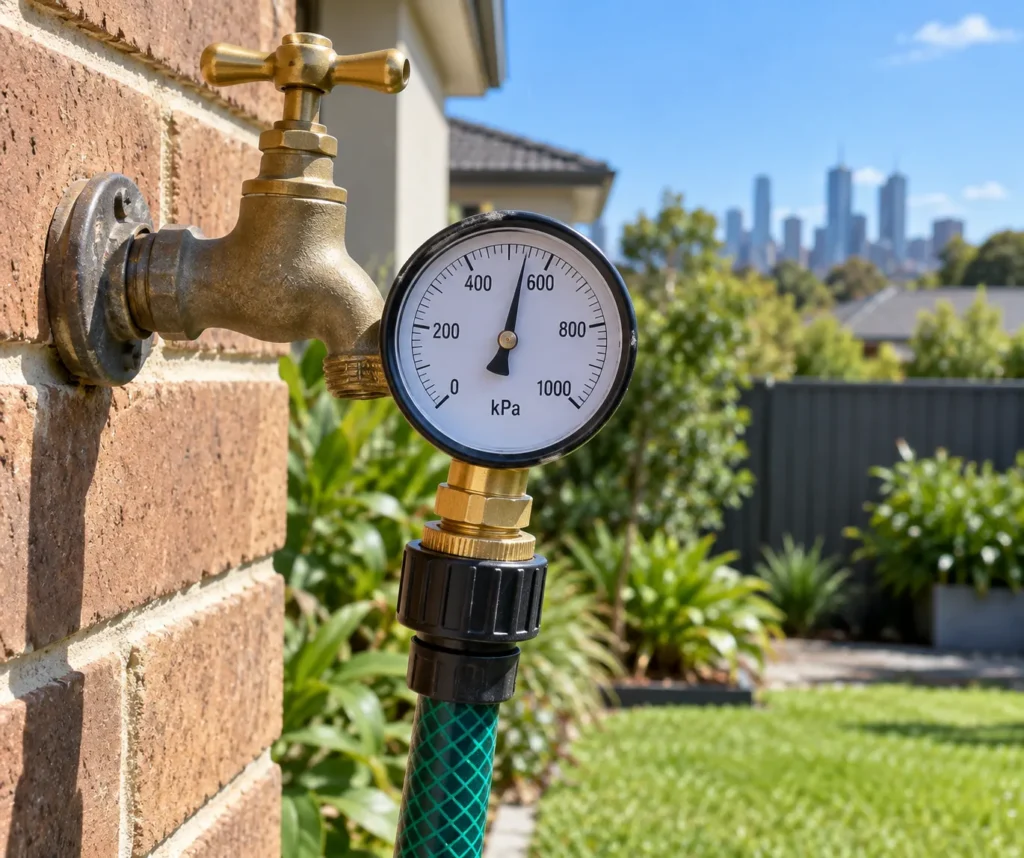
You can get a rough reading yourself with a gauge from any hardware store. The regulator’s own described method is to connect a calibrated pressure gauge to the meter outlet at the property boundary, or to the garden tap next to it, which shows the static pressure being supplied.
- Turn off every tap and appliance in the house so nothing is drawing water.
- Screw the gauge onto the garden tap closest to the water meter.
- Open that tap fully and read the dial.
- Note the reading, then repeat late at night or early in the morning.
A reading above 500 kPa means a pressure limiting valve is required. Readings fluctuate through the day, so a single measurement is a snapshot rather than a verdict, and a licensed plumber’s test is what counts for compliance purposes.
Worth knowing that the opposite problem exists too. If your reading is low rather than high and fixtures are running weakly, our guide on what causes low water pressure covers that instead.
What Actually Fixes Water Hammer
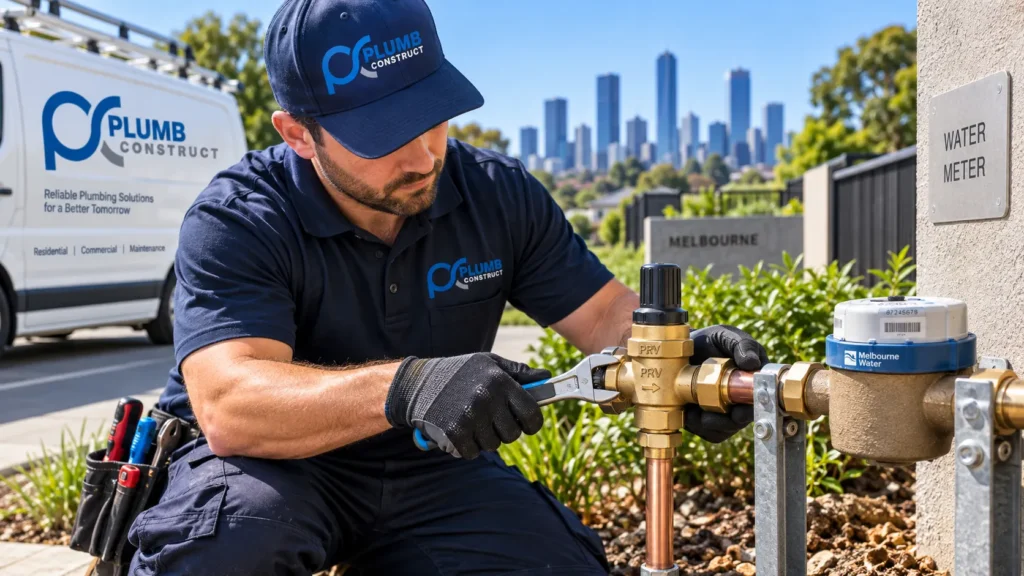
A permanent fix usually involves more than one measure, because water hammer normally has more than one contributing cause.
A Pressure Limiting Valve at the Meter
A pressure limiting valve reduces incoming mains pressure to a safe, consistent level before it enters the house. It addresses the root cause where pressure is the underlying problem, and it is the only measure that also protects appliances, tapware and pipework across the whole property. Valves are available in fixed outlet settings and must remain accessible for inspection, adjustment and replacement.
A common concern is that it will weaken the shower. It reduces pressure, not flow. Set correctly, fixtures perform normally.
Water Hammer Arresters
An arrester is a small device fitted close to a fast-closing valve, containing a cushion of air or gas that absorbs the pressure spike. Fitted at the washing machine, dishwasher or a specific problem fixture, it stops the shockwave at its source. Arresters treat the symptom effectively but do nothing about pressure elsewhere in the system.
Re-Clipping Loose Pipework
Pipe clips work loose over years of thermal movement, and unsupported pipe through a roof space or under a floor physically slams against timber when a shockwave passes. Sometimes the pressure is within range and the noise is entirely mechanical. Securing the run is the fix, and it costs very little.
Replacing Worn Washers and Valves
Where the noise is fluttering rather than a single bang, the cause is often a perished tap washer or a failing appliance solenoid. Replacing the component removes the noise without touching anything else.
Why Fixing Only One Cause Usually Fails
The frequent finding on a water hammer callout is a combination rather than a single fault: mains pressure running above the limit, a fast-closing solenoid on a washing machine or dishwasher, and pipe clips that have loosened over years of movement. Address one and the noise often returns within months.
That is why the diagnosis matters more than the parts. Fitting an arrester at the washing machine when the real issue is 700 kPa across the whole house quietens one appliance while every other fixture keeps taking the same punishment. Equally, fitting a pressure valve when the pipework is simply unsupported through a long roof-space run changes nothing, because the pipes were physically moving rather than reacting to pressure.
A proper assessment measures the pressure, identifies which valve triggers the noise, and inspects the pipe run before anything is fitted.
Can Water Hammer Damage Your Pipes?
Yes, though the damage is cumulative rather than immediate. Repeated pressure spikes stress pipes, joints and fittings. Over time this contributes to metal fatigue in copper, weeping at soldered joints, and premature failure of flexible connectors, which are among the most common causes of sudden indoor flooding.
Appliances take the same punishment. Inlet valves, hot water units and tapware all have rated maximum pressures, and sustained operation above them shortens service life.
The practical point is that the banging is a warning rather than the problem itself. A house that hammers for a decade is far more likely to develop a burst pipe or a hidden leak than one that does not, and hidden leaks frequently start at exactly the joints that have been absorbing the shock.
Why It Gets Worse at Night
A very common report is that the banging is loudest late at night or first thing in the morning, and there is a straightforward reason.
Street pressure is not constant. During the day, demand across the network holds pressure down. Late at night, when almost nobody is drawing water, demand falls and pressure in the mains rises. A house sitting just inside the limit during the afternoon can be comfortably above it at two in the morning.
This is why testing pressure once at midday can be misleading, and why a night-time reading is worth taking before deciding that pressure is not the issue.
Water Hammer in Older Homes and Apartments
Building type changes both how common the problem is and what usually causes it.
Period and Pre-1970s Homes
Older homes often have long pipe runs installed before modern clipping practice, no pressure valve at the meter because none was required at the time, and original washer taps. Renovation is usually what triggers the noise, when modern tapware and appliances meet pipework that was never set up for them. Areas served by our Malvern plumbers and Elsternwick plumbers have a high proportion of these.
Apartments and Shared Systems
Newer Homes and Estates
New builds should have a pressure limiting valve fitted as part of the original work. Where hammer appears in a recent home, the usual findings are a valve that has failed or drifted out of adjustment, or pipework clipped inadequately during construction. Both are worth checking against builder’s warranty before paying for the repair. Our Tarneit plumbers see this across newer estates.
When to Call a Plumber
Water hammer is rarely an emergency, but some situations warrant attention sooner rather than later.
- Your pressure reading is above 500 kPa, which means a valve is required rather than optional.
- The banging is loud enough to be felt through the floor or wall.
- You have noticed damp patches, staining or weeping at any visible joint.
- A flexible connector under a sink or behind an appliance looks bulged, corroded or aged.
- The noise started after new plumbing work, which may indicate a compliance issue with that work.
- You live in an apartment and the noise appears to come from shared pipework.
If a pipe or connector fails rather than just banging, our emergency plumbing guide covers what to do before help arrives.
Talk to a Licensed Plumber in Melbourne
If your pipes are banging and you want to know whether the cause is pressure, an appliance valve or unsupported pipework before anything gets fitted, Plumb Construct’s licensed Melbourne plumbers can test the pressure at the meter, identify the source and recommend the right fix.
Call 0424 932 737
Email [email protected]
300 Plummer St, Port Melbourne VIC 3207
Related Plumbing Services
- Burst Pipe Repairs – for joints and connectors that have already failed.
- Professional Leak Detection – locating leaks at stressed joints.
- Bathroom Plumber – tapware, mixers and fixture replacement.
Related reading: what causes low water pressure, the real cost of a leaking tap, and what to do before the plumber arrives.
FAQs - Banging or Noisy Pipes? Water Hammer Explained
What is water hammer?
It is hydraulic shock. When a valve closes quickly, the moving column of water stops abruptly and the energy becomes a pressure spike that travels back through the pipe. The bang you hear is the pipe absorbing that shockwave, often by moving and striking a joist or bracket.
Is water hammer dangerous?
Not immediately, but it causes cumulative damage. Repeated pressure spikes stress pipes, joints and flexible connectors, contributing to metal fatigue and eventual failure. The noise is best treated as a warning rather than an inconvenience.
What water pressure is too high in Australia?
AS/NZS 3500.1 sets a maximum static pressure of 500 kPa at any outlet other than a fire service outlet within a building. Above that, a pressure limiting or reduction valve must be installed. Mains pressure in the street can be considerably higher than this.
How do I check my water pressure at home?
Turn off everything drawing water, screw a pressure gauge onto the garden tap nearest the meter, and open it fully. Take a second reading late at night, since pressure rises when street demand falls. A licensed plumber’s test is what counts for compliance.
Why did the banging start after I got a new washing machine?
Modern solenoid inlet valves close in milliseconds, producing a much sharper pressure spike than older mechanical valves. The pressure problem was usually already present, and the older appliance was slow enough to mask it.
Will a pressure limiting valve weaken my shower?
No. It reduces pressure, not flow. Set correctly, fixtures perform normally while the system stops running above the level pipes and appliances are rated for.
What is a water hammer arrester?
A small device fitted close to a fast-closing valve, containing a cushioning chamber that absorbs the pressure spike. It works well at the specific fixture it serves but does nothing about pressure elsewhere in the system.
Why is the banging worse at night?
Street pressure rises when demand across the network drops. A property sitting just inside the limit during the day can be well above it in the early hours, which is why night-time testing is worth doing.
Can water hammer void my appliance warranty?
Possibly. Many tapware, appliance and hot water manufacturers specify a maximum inlet pressure in their warranty terms. Operating above it can affect a claim, which is a reason to test pressure rather than assume it is fine.
Can I fix water hammer myself?
Securing a loose pipe clip in an accessible location is reasonable. Fitting a pressure limiting valve at the meter is licensed plumbing work in Victoria and needs to be done by a licensed plumber to be compliant.
Why does only one tap make the noise?
That usually points to the valve at that fixture rather than the system. A worn washer or a failing cartridge in one tap can vibrate under pressure while everything else stays quiet.
The noise seems to come from another apartment. Who fixes it?
In a strata building the noise often originates in shared riser pipework that is common property, which makes it an Owners Corporation matter rather than an individual owner’s. A plumber’s assessment identifying the source is usually needed before responsibility can be settled.
Explore More
- All Posts
- Business & Specialty
- Costs & Guides
- Emergencies
- Fixes & Repairs
- public