Rainwater Tank Plumbed to the House? What Can Be Connected and What Cannot
Putting a tank in the back yard is the easy part. Connecting it to the house is regulated plumbing work, and the rules are less about the tank than about one thing: making sure rainwater can never find its way back into the drinking water main.
That single concern shapes everything. It decides what you can connect, what device you need, whether you have an annual testing obligation, and why a buried tank costs more to plumb than one sitting on the ground. Here is what applies in Victoria.
In short
- Garden, outdoor taps, toilet flushing and the washing machine are the standard connections. Toilets and laundry save the most water because they draw on the tank all year.
- Where mains water is available, use it for drinking and food preparation. Rainwater is not treated for human consumption.
- An above-ground tank is usually a low risk and a dual check valve is satisfactory. A buried tank is classed as high risk and needs a testable device.
- Testable devices require annual inspection and testing, and the property owner is responsible for it.
- What Rainwater Can Be Connected To
- What It Should Not Supply
- The Real Issue: Keeping Rainwater Out of the Main
- How the Mains Top-Up Has to Work
- If the Tank Is There for Energy Efficiency
- The Annual Obligation Owners Miss
- Licensing, Cost and Paperwork
- Talk to a Licensed Plumber in Melbourne
- Related Plumbing Services
- Frequently Asked Questions
What Rainwater Can Be Connected To
Four connections cover almost every domestic installation, and they are not equally worth doing.
Garden and Outdoor Taps
The simplest connection and the one most tanks start with. Watering the garden and washing the car are both standard uses, and because they do not touch the internal plumbing, this is the least complicated version of the job.
The limitation is seasonal. A garden-only tank fills over winter and sits full while nobody needs it, then empties in a dry summer and contributes nothing for months. That is why the next two connections matter more.
Toilet Flushing
This is where a tank earns its keep. Toilets draw on the tank every day of the year regardless of weather, which keeps the tank cycling and means the water you collected actually gets used.
It is also the connection with the most rules attached, because once rainwater is plumbed to a cistern that is also served by mains water, the drinking water supply has to be protected. That is the subject of the section below.
The Washing Machine
A cold water connection to the washing machine is the other year-round use, and together with toilet flushing it accounts for the largest saving available to a household. Clothes washing through a connection to the machine is a recognised use of tank water.
Practically, the question is usually where the machine sits relative to the tank and whether a line can be run without opening up finished rooms.
What It Should Not Supply
Drinking and food preparation, where mains water is available to you.
The Victorian position is straightforward: where a mains supply is available, use it for drinking and food preparation, because mains water is treated to be safe for human consumption and is more reliable. Rainwater off a roof is not treated, and what lands on the roof between rain events is not within anybody’s control.
Rural properties genuinely dependent on tank water are a different situation, and they carry real obligations with them: regular maintenance, treatment, routine testing and ongoing water quality monitoring. That is a commitment rather than a plumbing connection, and it is not something to take on in a suburb where a treated main runs past the front gate.
The sensible domestic setup is therefore a split one. Mains to the kitchen and the bathroom basin, tank to the toilets, the laundry and outside.
The Real Issue: Keeping Rainwater Out of the Main
What a Cross Connection Is
A cross connection is any connection between a drinking water supply system, directly or indirectly, and a non-drinking supply. Backflow is the unwanted reversal of flow into the drinking water supply, which can happen through backpressure or back siphonage.
Put those together and the risk is clear. Plumb a tank into pipework that is also fed from the main, get a pressure event, and tank water can travel the wrong way into the drinking supply. Not just yours. The main in the street serves your neighbours too, which is why this is regulated rather than left to judgement.
Where a cross connection can be removed altogether rather than managed, removing it is the preferred answer.
Above-Ground Tanks
For a tank sitting above ground, the risk classification is usually low, and a dual check valve is satisfactory protection for the drinking water supply. An air gap is the other accepted method.
A dual check valve is not a testable device, which means no annual testing obligation follows from it. For most suburban installations this is the straightforward path and it is worth knowing before you choose where the tank goes.
Buried and Underground Tanks
Here the answer changes substantially. A buried tank is classed as high risk, and a testable device is required rather than a dual check valve. The suitable devices are set out in the national plumbing standard.
Two consequences follow, and they are the reason this section exists. The device itself costs more and has to be installed where it can be accessed for testing. And you acquire an ongoing annual obligation that an above-ground tank would not have given you.
Underground tanks are popular on small blocks because they take no yard space. That is a real benefit. Just price the backflow device and the annual testing into the comparison rather than discovering them afterwards.
Swipe the table to see more →
| Tank | Risk classification | Protection | Annual testing |
|---|---|---|---|
| Above ground | Usually low | Dual check valve, or an air gap | Not required |
| Buried or underground | High | Testable backflow device | Required |
How the Mains Top-Up Has to Work
If your toilets run on tank water, something has to happen when the tank is empty, because a toilet that cannot flush is not an acceptable outcome of a dry February.
Where a reticulated supply is connected to a building with a rainwater tank used for sanitary flushing, an interchange device has to be installed so that flushing has a continuous supply. It can be automatic or manual, and what it does is allow alternate use of the two water sources rather than letting them mix.
That distinction is the whole point. An interchange device switches between sources. It does not join them. A top-up arrangement that simply tees mains water into the tank line is the cross connection the rules exist to prevent.
Automatic devices switch without anyone noticing, which is what most households want. Manual ones cost less and work perfectly well, provided somebody remembers to switch them. Decide which you are before the quote, because it affects the price.
If the Tank Is There for Energy Efficiency
Many tanks on newer Victorian homes exist because the build needed them to meet energy efficiency requirements. If that is your situation, specific minimums apply and they are worth checking against what was actually installed.
For a new Class 1 building where the tank is installed to satisfy those requirements, the tank must have a catchment area of at least 50 square metres, a capacity of at least 2,000 litres, and it must be connected to all toilets in the building.
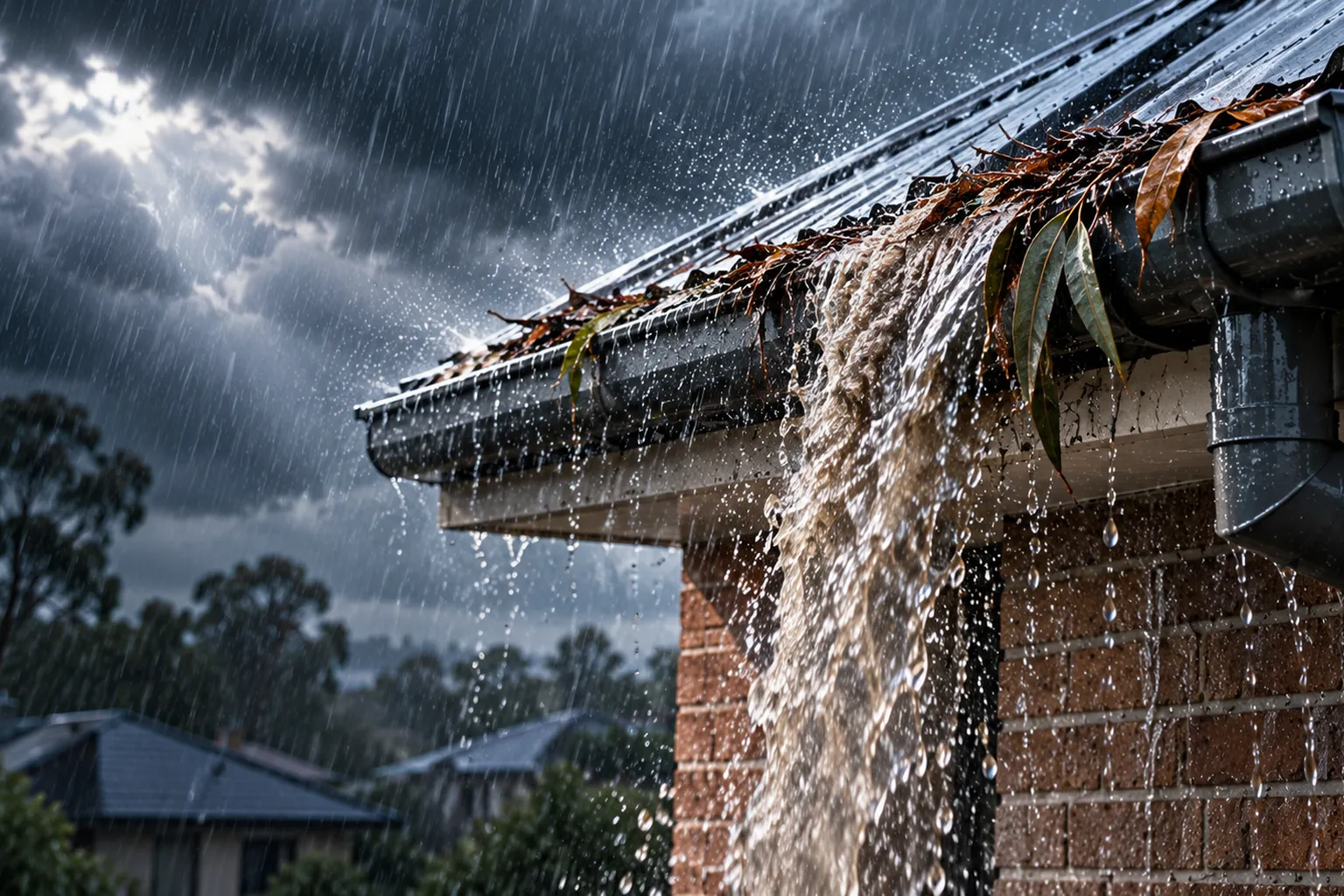
All toilets is the part most often missed. A tank connected to the downstairs toilet but not the upstairs one does not meet that requirement, and the time to find out is not when you sell. The catchment figure also means the roof area feeding the tank matters as much as the tank itself, so if your gutters and downpipes have been reworked since the build, it is worth confirming the catchment is still what it was. Our guide to gutters and roof leaks in Melbourne covers how that side of the system is checked.
The Annual Obligation Owners Miss
If your installation uses a testable backflow device, which a buried tank requires, it has to be inspected and tested annually. The property owner is responsible for making that happen.
Two details matter. The testing has to be carried out by someone licensed specifically in backflow prevention work, which is a separate licence class rather than something every plumber holds. And because nobody sends you a reminder, these lapse quietly for years until a water authority or a buyer’s conveyancer asks for the records.
If you have a buried tank and cannot remember the last test, that is your answer. Put it on an annual reminder in the same month each year and keep the certificates together.
Licensing, Cost and Paperwork
Connecting a tank to the house is regulated plumbing work. The installation has to comply with the national plumbing standard and use WaterMark approved materials, which rules out assembling something from hardware store parts and hoping.
On the paperwork, note how the threshold is calculated. A compliance certificate is required where the total installation cost reaches $750 or more, and that total includes the storage tank itself, not just the plumbing labour. Most tank installations clear that comfortably, so expect a certificate and confirm at quote stage that you are getting one.
Keep it with your property records. It is the document that shows the connection was done properly, and it is the one a buyer will ask about.
Talk to a Licensed Plumber in Melbourne
If you are adding a tank, connecting an existing one to the toilets or laundry, or you have a buried tank and no idea when its backflow device was last tested, those are all things worth getting right rather than guessing at. Plumb Construct is licensed, works across Melbourne, and can tell you which protection your situation actually needs before you commit to a tank position.
📞 0424 932 737
📧 [email protected]
📍 Melbourne, VIC
📩 Request a Quote: Contact Page
Related Plumbing Services
Frequently Asked Questions About Rainwater Tank Plumbing
What can a rainwater tank be connected to in a Melbourne home?
Garden and outdoor taps, toilet flushing, and a cold water connection to the washing machine are the standard connections. Toilets and laundry are the ones worth doing, because they draw on the tank all year rather than only in summer, which means the water you collect actually gets used. Where mains water is available it should supply drinking and food preparation.
Can I drink rainwater from my tank in Melbourne?
Where a mains supply is available, the Victorian advice is to use it for drinking and food preparation, because it is treated to be safe for human consumption and is more reliable. Rainwater off a roof is untreated. Rural properties that genuinely depend on tank water take on real obligations with it, including regular maintenance, treatment, routine testing and water quality monitoring.
Do I need a backflow prevention device for a rainwater tank?
Yes, where rainwater and drinking water both supply the same fixtures the drinking water supply has to be protected, by an air gap or a backflow prevention device. For an above-ground tank the risk is usually classified as low and a dual check valve is satisfactory. A buried tank is classed as high risk and a testable device is required instead.
Does a buried rainwater tank cost more to plumb than one above ground?
Generally yes, and the reason is the backflow protection rather than the excavation alone. A buried tank is a high risk classification, which means a testable backflow device rather than a dual check valve, installed somewhere it can be accessed. It also creates an annual inspection and testing obligation that an above-ground tank would not. Worth pricing both into the comparison.
How does the mains top-up work if my tank runs dry?
Through an interchange device, which can be automatic or manual, that allows alternate use of the two water sources so that toilet flushing has a continuous supply. The important point is that it switches between sources rather than joining them. A top-up that simply tees mains water into the tank line creates exactly the cross connection the rules exist to prevent.
Explore More
- All Posts
- Business & Specialty
- Costs & Guides
- Emergencies
- Fixes & Repairs
- public