Going Away This Summer? What to Turn Off Before You Leave
A pipe that fails while you are home is a bad afternoon. The same pipe failing on the second day of a three week trip is a different event entirely, because nothing stops it until someone opens the door. Melbourne summers are the worst time for this, and the fix takes about fifteen minutes before you leave.
This is what to turn off, the order to do it in, what to leave alone, and the two things to check the moment you get back.
In short
- Turn the hot water system off first, then the water at the meter. Doing it the other way round can leave a storage tank running dry.
- Close the taps behind the washing machine and dishwasher. A failed inlet hose is one of the most common sources of indoor water damage.
- Do not shut the mains if the property has a fire sprinkler system, or if a shared supply feeds other homes.
- Read the meter before you go and again when you get back. Any movement means water went somewhere while the house was empty.
- Why an Empty House Is Riskier in a Melbourne Summer
- Do It in This Order
- What to Turn Off, Item by Item
- What to Leave Running
- The Fifteen Minute Check Before You Walk Out
- What Your Insurer Expects
- What to Do When You Get Back
- Talk to a Licensed Plumber in Melbourne
- Related Plumbing Services
- Frequently Asked Questions
Why an Empty House Is Riskier in a Melbourne Summer
Three things line up over summer and they all point the same way.
Melbourne sits on reactive clay. It swells through a wet winter and shrinks through a dry summer, and that movement is what pulls apart pipe joints and cracks service pipes that have been fine for decades. We have written about that in detail in why pipes burst in hot, dry weather in Melbourne, and the short version is that the failures cluster in the hottest, driest stretch of the year.
That stretch is also when most people take their longest trip. So the period of highest risk is the period when the fewest people are home to notice.
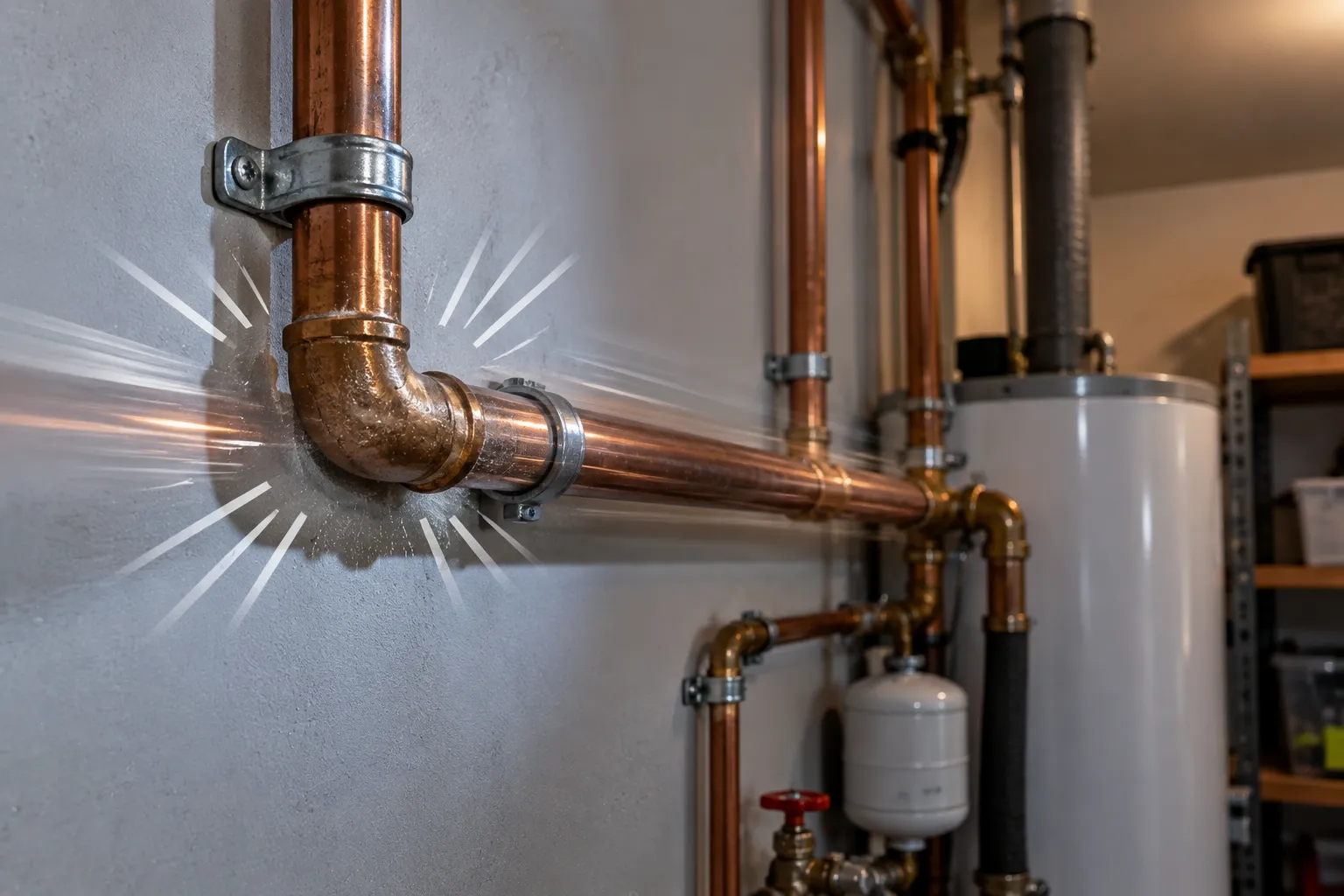
And nothing self-limits. A split in a supply pipe under mains pressure runs continuously, metered to you, until someone turns it off. Over a fortnight that is not a repair bill, it is a repair bill plus flooring, plaster, cabinetry and a water account that will take some explaining.
Do It in This Order
The sequence matters more than people expect, and getting it backwards is the most common mistake here.
The order
- Turn off the hot water system. Power, gas, or both, depending on what you have.
- Close the taps behind the washing machine and dishwasher. Two seconds each, and they are the appliances most likely to let go.
- Read the water meter and write the figure down with the date.
- Turn off the water at the meter stop tap. Slowly, and only as far as it wants to go.
- Open a tap inside to drop the pressure and confirm the supply is actually off.
Why the Order Matters
If you shut the mains while a storage hot water system is still switched on, the tank has no way to refill. A tank that runs dry with the element or burner still active is how elements fail and how tanks get damaged. The standard advice is never to run an empty tank, and to make sure it is full again before switching it back on.
Hot water off first, water off second. Then the reverse on the way home.
What to Turn Off, Item by Item
The Water at the Meter
The stop tap sits beside your meter and shuts water to the whole property. Turning it off is something you are entitled to do. Turn it slowly and stop when it stops. On a tap that has not moved in years, forcing it is how a weep becomes a leak, and the meter assembly belongs to your water retailer rather than to you.
If you are not sure which fitting is the stop tap, our guide to a leaking water meter and who pays has a labelled walkthrough of what sits in the box.
When Not to Shut the Mains
Leave it on if the building has a fire sprinkler system. Sprinklers need water to work, and isolating them is both dangerous and likely a breach of the building’s requirements. Leave it on if your stop tap feeds more than one dwelling, which is common in older subdivided properties and some unit blocks. And leave it on if anyone will be staying at the property while you are away, including a house sitter who is only there part of the time.
In an apartment you may not have an accessible individual stop tap at all. If that is the case, the appliance taps and the hot water isolation are still worth doing.
The Hot Water System
How you turn it off depends entirely on what type you have. Check the label on the unit if you are not certain.
Electric Storage
Switch off the dedicated circuit breaker in the meter box, and the local isolator beside the unit if one is fitted. Off at the breaker is off.
Gas Storage
Set the gas control to pilot or to off, following the label on that particular unit, and close the appliance gas isolation valve if the instructions call for it. Do not improvise here. Different units expect different things and the label is the authority.
Continuous Flow
Turn the power off at the appliance isolation, and the gas off as well on a gas model. There is no stored water in these, so the dry tank problem does not apply, but there is also very little to gain from leaving one powered in an empty house.
Solar
Leave the roof-mounted valves alone. Solar systems have components up there that should be handled by someone who works on them, and nobody should be on a roof in a Melbourne summer to save a few dollars of standby. If you want a solar system isolated for a long trip, the practical approach is shutting the water at the main meter and asking a plumber what else, if anything, your particular system needs. Our hot water systems page covers the types we work on.
The Washing Machine and Dishwasher Taps
These are the two most worthwhile seconds of the whole exercise. Both appliances connect with flexible inlet hoses, those hoses sit under mains pressure permanently, and they perish. A failed inlet hose discharges at full pressure into a laundry or a kitchen for as long as nobody is there.
The taps are usually on the wall directly behind the appliance. Turn them clockwise until they stop. If a tap is seized or weeping when you touch it, that is a repair worth booking before you go rather than after you get back.
The Irrigation Timer
If you shut the water at the meter, an irrigation controller will keep cycling against a dead supply, which does the garden no good and can be hard on some solenoid valves. Turn the controller off rather than leaving it running.
If you are leaving the mains on so the garden survives, the watering has to comply with the Permanent Water Saving Rules while you are away just as it does while you are home. Watering systems, including any automatic sprinkler or drip line, may only run between 6pm and 10am. A timer set outside that window is a breach whether or not you are in the country when it runs.
What to Leave Running
Turning off more is not better. A few things are worth leaving exactly as they are.
Leave the fridge and freezer powered unless you are emptying them. Leave any sump pump or subfloor pump powered, because a storm while you are away is precisely when it earns its keep. Leave the fire sprinkler supply alone, as above. And leave the gas on at the meter unless you have a specific reason to isolate it, because shutting gas at the meter means relighting pilots on return, which is not always a homeowner job.
The Fifteen Minute Check Before You Walk Out
- Walk the wet areas. Under the kitchen sink, under both vanities, behind the toilet, around the laundry trough. You are looking for damp, staining or a swollen cupboard base.
- Check every visible flexible hose. Any rust, bulging, kinking or crustiness on a braided hose means replace it, not risk it.
- Run the meter test. Everything off, read the meter, wait thirty minutes, read again. Movement means you already have a leak, and now is a much better time to find out.
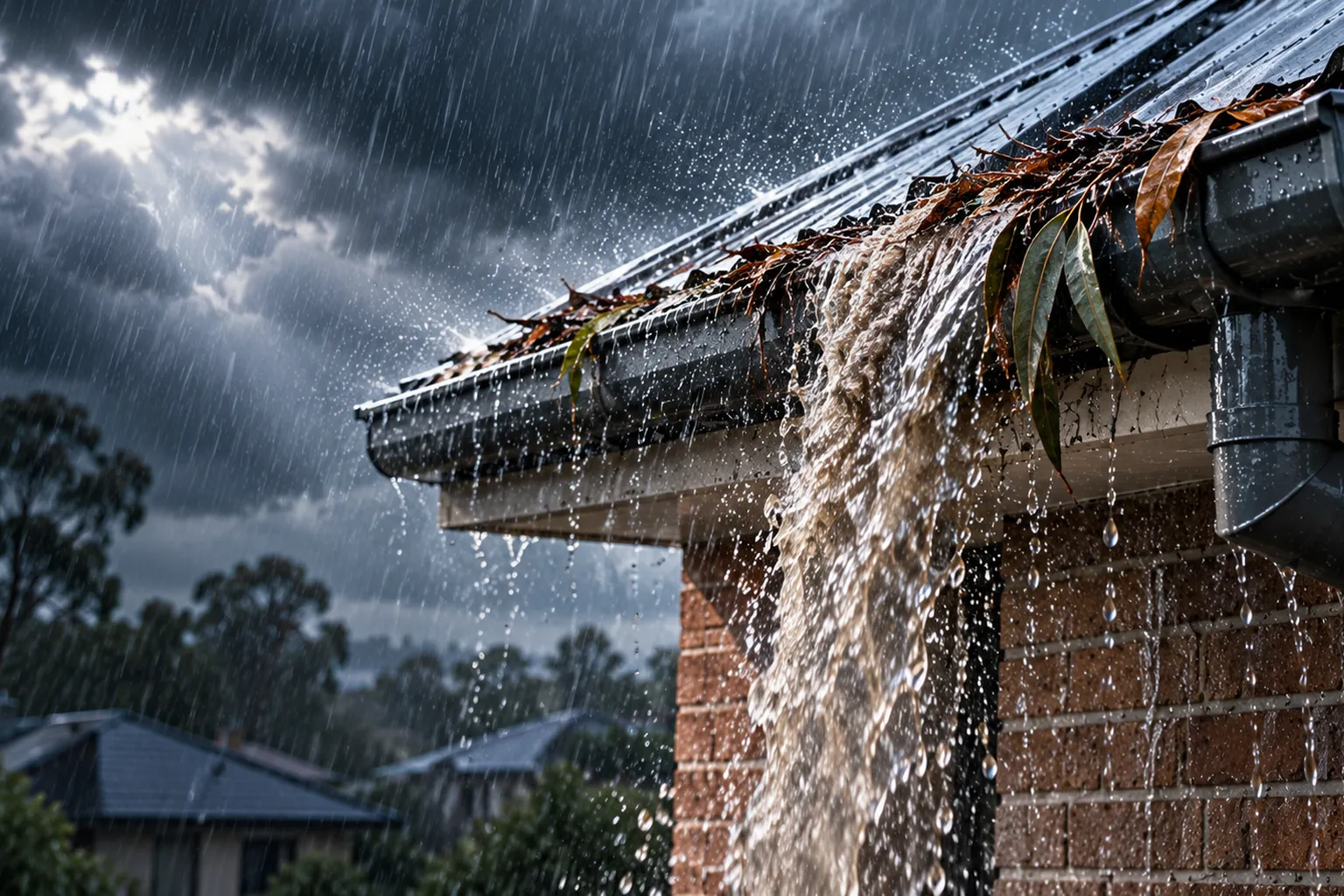
- Clear the gutters and the downpipe outlets. Summer storms in Melbourne arrive hard and fast, and an overflowing gutter with nobody home backs water into the eaves.
- Check the overflow relief gully outside. Grate present, riser clear of soil and mulch. It is what keeps a sewer blockage outside the house rather than in the bathroom.
- Leave a key with someone local. Insurers and plumbers can only act if somebody can open the door.
What Your Insurer Expects
Worth ten minutes with your policy before a long trip, because the rules change once a house counts as unoccupied.
Definitions vary between insurers, so your own Product Disclosure Statement is the only authority on your policy. As an illustration of how it tends to work, one major Australian insurer treats a home as unoccupied once it has been vacant for more than 60 continuous days. In that case cover still applies, but an additional unoccupied excess is payable on top of any other excess. Other insurers set different periods and some treat it differently again.
The part that matters for this article is what insurers ask you to do before leaving. Turning off the water supply to fixtures appears on that list alongside locking up, arranging mail collection and nominating a house sitter. In other words the steps above are not just sensible, they are close to what your insurer would expect to hear you did.
If your trip is long enough to cross your insurer’s unoccupied threshold, tell them before you go rather than at claim time.
What to Do When You Get Back
Reverse the order, and give it five minutes before you start unpacking.
On return
- Open the meter stop tap slowly and let the house refill. Opening it fast sends a pressure surge through the pipework.
- Check the storage tank has refilled before switching the hot water back on. Run a hot tap until water flows steadily, then restore power or gas.
- Read the meter and compare it with the figure you wrote down. Any increase while the house was shut off needs explaining.
- Run every tap and shower for a minute or two, and flush every toilet. This clears water that has been sitting in the pipework and refills the traps.
- Pour a couple of litres down every floor waste. Traps dry out over a few weeks in summer heat, which is why a house can smell of sewage the day you walk back in. Our guide to sewer smell in the house explains what is happening and how to stop it.
- Reopen the washing machine and dishwasher taps and watch each connection for a minute before you load either one.
Talk to a Licensed Plumber in Melbourne
If the meter test showed movement, if a flexible hose looks past it, or if the stop tap at your meter will not hold, those are all better dealt with before you leave than discovered afterwards. Plumb Construct is licensed, works across Melbourne, and answers emergency calls 24/7, including over the holidays.
📞 0424 932 737
📧 [email protected]
📍 Melbourne, VIC
📩 Request a Quote: Contact Page
Related Plumbing Services
Frequently Asked Questions About Leaving a House Empty
Should I turn the water off at the meter when I go on holiday?
For a trip of more than a few days, yes, in most cases. A split in a supply pipe runs continuously under mains pressure until somebody stops it, and nobody is there to stop it. The exceptions are a property with a fire sprinkler system, a stop tap that feeds more than one dwelling, and a house where someone will be staying while you are away. Turn the hot water system off before you close the mains, not after.
Do I need to turn off my hot water system when I am away?
It is worth doing on a longer trip, and it is essential if you are also shutting the water off at the meter, because a storage tank cannot refill with the supply closed and should never be run empty. How you turn it off depends on the type. Electric storage goes off at the circuit breaker and any local isolator, gas storage goes to pilot or off according to the label on the unit, and continuous flow goes off at the appliance isolation. Leave roof-mounted solar components to a plumber.
Why does my house smell like sewage when I come home from holiday?
The water seals in your drain traps have evaporated. Each trap holds only a few centimetres of water, and in a closed-up house over a Melbourne summer a floor waste that nobody uses can lose its seal in two to three weeks, leaving an open pipe to the sewer. Run every tap and shower, flush every toilet, and pour a couple of litres down each floor waste. If the smell persists after that, something else is going on.
Does home insurance still cover my house while I am away?
Usually, but the terms can change once the property counts as unoccupied, and every insurer defines that differently. One major Australian insurer treats a home as unoccupied after more than 60 continuous vacant days, keeps cover in place, and charges an additional unoccupied excess on a claim. Your own Product Disclosure Statement is the only reliable answer for your policy. Insurers commonly expect you to have turned off the water supply to fixtures before leaving, so the steps in this guide line up with what they ask for.
Can I leave my garden watering system running while I am away?
Only if it complies with the Permanent Water Saving Rules, which apply every day of the year across Melbourne regardless of whether you are home. Watering systems, including automatic sprinklers and drip lines, may only operate between 6pm and 10am. A controller set to run outside that window is a breach, and breaches can attract fines. If you are shutting the water off at the meter, turn the controller off as well rather than leaving it cycling against a dead supply.
Explore More
- All Posts
- Business & Specialty
- Costs & Guides
- Emergencies
- Fixes & Repairs
- public