Apartment Plumbing: Which Pipes Are Yours and Which Belong to the Owners Corporation
When something leaks in a Melbourne apartment, the argument that follows is almost always about the same thing: is this pipe yours or is it the owners corporation’s? Owners point at the plan of subdivision, managers point at the plan of subdivision, and both read it differently.
The plan is usually the wrong place to look first. In Victoria the question that tends to decide it is simpler and it is about purpose rather than position. This guide explains which test applies, the rule that stops you fixing a shared pipe yourself, and why the plumber’s report is the document that settles the matter.
In short
- A service that serves your lot and only your lot is generally yours to maintain, even where it runs outside your walls.
- A service that benefits more than one lot is the owners corporation’s, and you are not permitted to repair it yourself without being authorised to act as its agent.
- So the deciding question is which lots the pipe serves, not where it sits on the plan of subdivision.
- Make sure the plumber’s report states both the pipe’s location and which lots it serves. That document is what resolves the dispute.
- The Test Most People Use Is the Wrong One
- The Question That Actually Decides It
- The Rule That Catches Owners Out
- Common Scenarios and Who Usually Pays
- Why the Plumber’s Report Decides the Outcome
- When Your Leak Damages Another Unit
- Access, Notice and Timeframes
- What to Do When Something Leaks
- Talk to a Licensed Plumber in Melbourne
- Related Plumbing Services
- Frequently Asked Questions
The Test Most People Use Is the Wrong One
The usual approach is to pull out the plan of subdivision, find the lot boundary, and decide the question on which side of that line the pipe sits. It feels like the obvious method and it is how most of these disputes start.
The problem is that pipes do not respect lot boundaries. A pipe that serves your bathroom can run through a riser, under a slab, or across a neighbouring lot before it gets anywhere near your walls. Deciding responsibility purely on position produces answers that make no practical sense, such as a manager insisting the owners corporation owns a pipe that exists solely to drain one shower.
That exact scenario has been considered in Victoria, and the conclusion was that the pipe’s purpose matters more than its position on the plan.
The Question That Actually Decides It
Victorian owners corporation law splits the responsibility along a line of purpose rather than geography.
Services That Serve Your Lot Exclusively
Under the Owners Corporations Act 2006 a lot owner must maintain any service that serves that lot exclusively. If a pipe, a waste, a branch or a fitting exists only to supply or drain your apartment and no other, maintaining it is your job and the cost is yours.
This is the part that surprises owners, because it holds even where that pipe is physically outside the boundary drawn on the plan. Sole purpose is what counts.
Services That Benefit More Than One Lot
The owners corporation must manage, administer, repair and maintain the common property. Where a service benefits more than one lot, such as a shared riser, a common sewer line, a main water supply serving the building, or a stack that several apartments discharge into, that sits with the owners corporation rather than with you.
Shared means shared in function. A stack that takes waste from six apartments is a shared service even though it passes through a cupboard inside your lot.
Why a Pipe Outside Your Walls Can Still Be Yours
Put those two rules together and you get the result that causes most of the arguments. A pipe can be entirely outside your lot on the plan, pass under common property, and still be your responsibility, because it serves nothing except your apartment.
Equally, a pipe running inside your apartment can belong to the owners corporation if other lots depend on it. Location tells you where the work will happen. Purpose tells you who pays for it.
The Rule That Catches Owners Out
Here is a rule most apartment owners have never heard, and it works in the opposite direction to what people expect.
A lot owner must not repair, alter or maintain a service in or relating to a lot that is for the benefit of more than one lot, unless the owners corporation has expressly authorised them to act as its agent.
So when you discover the leak is in a shared pipe, you are not simply entitled to call a plumber and send the invoice to the owners corporation. Doing the work without authorisation can leave you holding a bill you had no right to incur. The correct sequence is to establish which service it is, report it, and get written authorisation if you are going to arrange the repair yourself.
Emergencies are the practical exception, because stopping water damage comes first. Even then, notify the manager while it is happening rather than afterwards, and keep every message.
Common Scenarios and Who Usually Pays
These are the situations that come up most often. Treat them as the usual position rather than a guarantee, because your plan of subdivision and your owners corporation rules can change the answer.
Swipe the table to see more →
| What has happened | Who it serves | Usually |
|---|---|---|
| Tap, mixer or toilet cistern inside the apartment | Your lot only | Lot owner |
| Blocked waste from your own sink, shower or basin before it reaches the stack | Your lot only | Lot owner |
| Hot water unit serving your apartment alone | Your lot only | Lot owner |
| A branch pipe outside your walls that drains only your bathroom | Your lot only | Lot owner, despite the position |
| Blocked main stack backing up into several apartments | Multiple lots | Owners corporation |
| Shared riser or common water main feeding the building | Multiple lots | Owners corporation |
| Common sewer line across the property | Multiple lots | Owners corporation |
| A shared pipe that happens to run inside your cupboard | Multiple lots | Owners corporation, despite the position |
| Balcony membrane and the drainage outlet within the balcony | Varies by plan | Often lot property |
That last row has its own guide, because balconies are the single most disputed area in Melbourne apartments and the answer turns on where the plan draws the boundary. See leaking balcony in your Melbourne apartment and who is actually responsible.
Why the Plumber’s Report Decides the Outcome
If the test is which lots a pipe serves, then somebody has to establish that as a fact. That somebody is the plumber, and the report is the document everyone else then argues from.
What the Report Needs to State
Two things, and a surprising number of reports contain only the first.
The location of the fault, described precisely enough that it can be found again. And which lots the pipe serves. Without that second element the report cannot answer the responsibility question, which means the dispute continues and somebody pays for a second inspection.
If a report you already have omits it, you can ask the plumber to add it. They were there, they saw the pipework, and it is a reasonable request.
What to Ask For When You Book
Say at the time of booking that the report needs to identify which lots the pipe serves, because responsibility turns on it. A plumber who works in apartments will know exactly why you are asking.
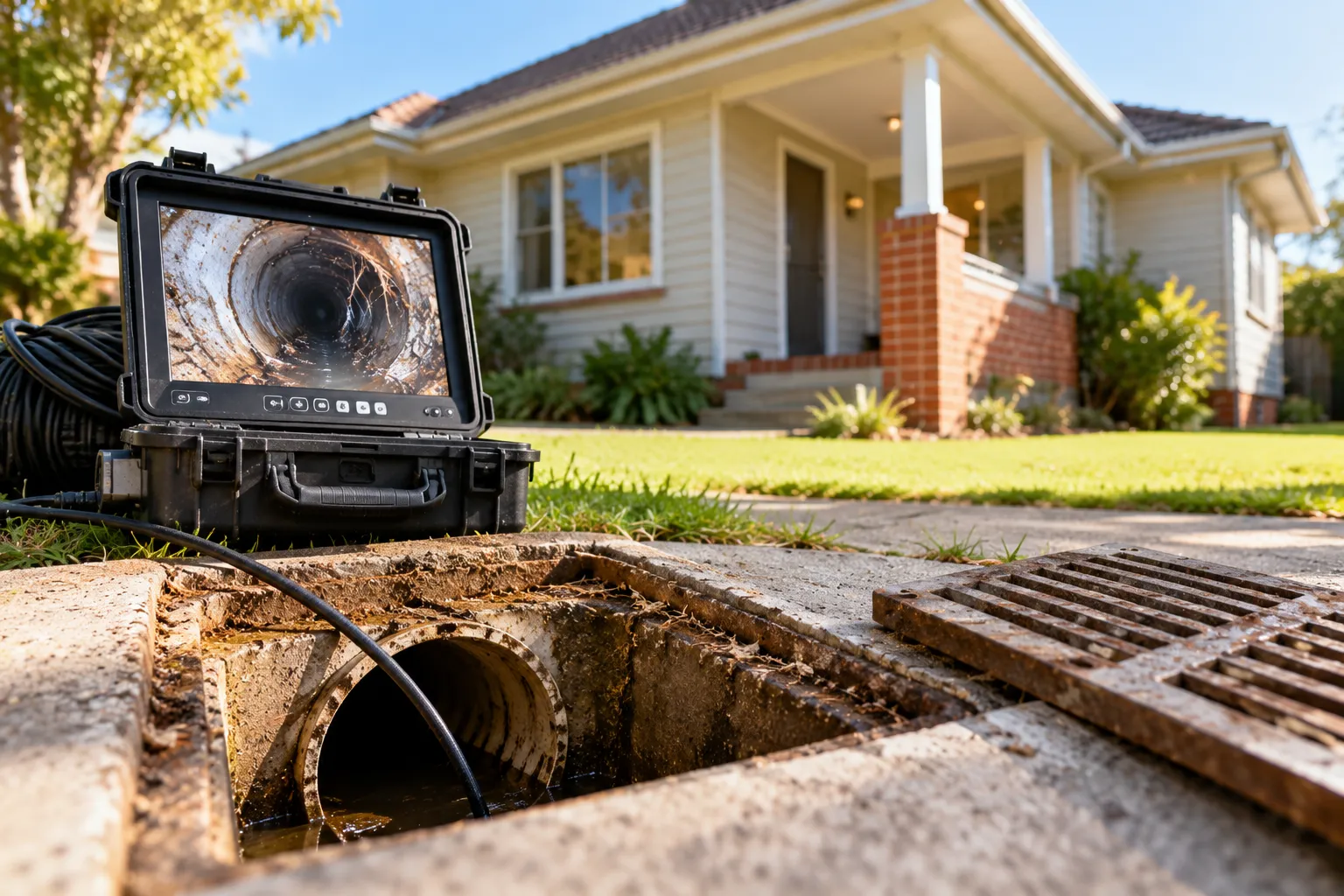
Also ask for photographs, and for the pipe to be traced far enough in both directions to show where it goes. A camera inspection often settles in twenty minutes what weeks of correspondence cannot, which is why our leak detection work in apartment buildings is usually about establishing facts rather than finding water.
When Your Leak Damages Another Unit
This is where the stakes rise, because the question is no longer just who repairs the pipe.
Under the Water Act 1989 a person who causes an unreasonable flow of water onto other land can be liable for the damage that results. In an apartment building the land below you belongs to somebody else, so water escaping from a service you are responsible for and damaging the apartment underneath can expose you to the cost of their repairs as well as your own.
Two practical consequences follow. Act quickly when you find water, because a leak you knew about and left running reads very differently to one you stopped the same day. And keep the evidence: photographs with dates, the plumber’s report, every message to the manager.
A shower leaking into the apartment below is the most common version of this, and the diagnosis is specific enough to have its own guide. See why a shower leaks into the room below.
Access, Notice and Timeframes
Repairs in apartments often need somebody to get into a lot that is not theirs, and there are rules about that.
Where the owners corporation needs to enter a lot, it generally has to give the occupier at least seven days notice in writing, unless the occupier agrees to shorter notice or it is an emergency. If a lot owner refuses or fails to carry out repairs that are theirs to do, the owners corporation can authorise entry, but it has to serve a notice requiring those repairs first.
If the apartment is tenanted, the notice requirements under the Residential Tenancies Act 1997 apply as well. Renters have their own protections and their own escalation path, which we cover in urgent plumbing repairs for renters in Victoria.
What to Do When Something Leaks
In this order
- Stop the water if you safely can. Your own isolation valve or stop tap if you have one. In many apartments you will not, which is worth finding out before you need it.
- Photograph everything, with dates. The water, the damage, the ceiling below if you can get access. This is the cheapest insurance in the process.
- Notify the owners corporation manager in writing, even if you think it is your own pipe. Written notice on the day costs nothing and matters later.
- Get a licensed plumber to establish the facts, and ask for the report to state which lots the pipe serves as well as where the fault is.
- Do not arrange repairs to a shared service until you have written authorisation to act as the owners corporation’s agent. Emergencies aside, this is the step that leaves people out of pocket.
- Keep every message in one place. If this becomes a dispute, the chronology is what you will be asked for.
One more thing worth checking while you are at it. In buildings where each apartment has its own sub-meter off a common supply, the water retailer typically covers only the physical meters and the pipework between them is the owners corporation’s. We go through that in a leaking water meter and who pays.
This guide is general information about how these responsibilities usually fall in Victoria, not legal advice. Your plan of subdivision and your owners corporation rules govern your building, and for a dispute involving real money it is worth getting independent legal advice.
Talk to a Licensed Plumber in Melbourne
If you are stuck between your owners corporation and a leak, what usually breaks the deadlock is a report that states where the fault is and which lots the pipe serves. Plumb Construct works in apartment buildings across Melbourne, is licensed, and answers emergency calls 24/7 when water is moving and the argument can wait.
📞 0424 932 737
📧 [email protected]
📍 Melbourne, VIC
📩 Request a Quote: Contact Page
Related Plumbing Services
Frequently Asked Questions About Apartment Plumbing Responsibility
Who is responsible for a leaking pipe in a Melbourne apartment?
It depends on which lots the pipe serves rather than where it sits. Under Victorian owners corporation law a lot owner must maintain any service that serves that lot exclusively, while the owners corporation must repair and maintain the common property, which includes services benefiting more than one lot. So a pipe that only supplies or drains your apartment is generally yours, and a shared stack or riser is generally the owners corporation’s.
The pipe is outside my apartment, so is it automatically common property?
No, and this is the most common misunderstanding. Where a pipe sits on the plan of subdivision is not the deciding factor. If that pipe exists solely to serve your lot, it is likely your responsibility even though it runs outside your boundary. The reverse applies too: a pipe running inside your apartment can belong to the owners corporation if other lots depend on it.
Can I just fix a shared pipe and bill the owners corporation?
Generally no. A lot owner must not repair, alter or maintain a service relating to a lot that benefits more than one lot unless the owners corporation has expressly authorised them to act as its agent. Arranging the work without that authorisation can leave you holding the bill. Report it, establish which service it is, and get written authorisation before you engage anyone, with emergencies being the practical exception.
What if my leak damages the apartment below mine?
Under the Water Act 1989 a person who causes an unreasonable flow of water onto other land can be liable for the resulting damage, and in an apartment building the space below you is somebody else’s property. If the leak came from a service you are responsible for, you may be exposed to their repair costs as well as your own. Act on the day you find it, keep dated photographs, and keep the plumber’s report.
What should I ask the plumber to put in the report?
Two things. Where the fault is, described precisely enough to be found again, and which lots the pipe serves. Many reports contain only the first, which leaves the responsibility question unanswered and usually means a second inspection. Say at booking that you need the lots identified, ask for photographs, and ask for the pipe to be traced far enough in both directions to show where it goes.
Explore More
- All Posts
- Business & Specialty
- Costs & Guides
- Emergencies
- Fixes & Repairs
- public