Backflow Prevention and RPZ Testing: What Melbourne Businesses Must Do Each Year
If your business premises has a testable backflow prevention device at the boundary, you have an annual obligation attached to it, and the consequence of missing it is more serious than most owners realise. Your water supply can be disconnected.
This is one of those compliance items that sits quietly until it does not. Nobody sends you a reminder, the device is usually in a pit nobody looks in, and the obligation belongs to the property owner rather than the plumber who installed it. Here is what actually applies in Melbourne.
12
Months maximum between tests, from commissioning onwards
20
Days to get the test report to your water corporation
High
Hazard rating automatically assigned to a new commercial development
What Backflow Is
Backflow is the unwanted reversal of flow into the drinking water supply. It happens through backpressure, where something on your side pushes harder than the main, or back siphonage, where a pressure drop in the main pulls water back out of your pipework.
A cross connection is any connection between a drinking water supply system, directly or indirectly, and a non-drinking supply. On a commercial site there are usually several: a chemical dosing line, a cooling tower, a dental chair, a car wash recycling system, an irrigation main, a trade waste process.
The reason this is regulated rather than left to good practice is that the main in the street is shared. A backflow event on your premises does not contaminate your water. It contaminates the network’s water, which means your neighbours’ water.
Worth noting the hierarchy: where a cross connection can be removed altogether rather than managed with a device, removing it is the preferred answer. A device is what you install when the connection has to stay.
Which Businesses Need a Device
Any property carrying a medium or high hazard rating needs a testable containment device at or near the property boundary. In practice that covers most commercial premises doing anything beyond running taps and toilets.
- Food businesses. Cafes, restaurants, commercial kitchens, food processing.
- Medical and dental. Clinics, surgeries, laboratories, veterinary practices.
- Anything with chemical dosing or recycling. Car washes, laundries, cooling towers, mechanical services, irrigation systems with fertigation.
- Properties with a Class A recycled water supply. A device matching the hazard rating is required.
- Fire services. A low hazard device as a minimum, and sprinkler systems of 80 mm or larger need at least a testable single check valve.
- Standpipes for tankering or temporary supply. Rated high hazard.
Residential properties are generally outside this, with the exception covered in our guide to rainwater tank plumbing, where a buried tank attracts a high risk classification and the same annual testing obligation follows.
The Three Hazard Ratings
The rating decides the device, and the device decides the cost and the obligation. These are the definitions used in the Victorian framework.
High Hazard
Any hazard with the potential to cause death. That is the actual wording, and it sets the tone for how seriously this is treated.
A high hazard property must install a reduced pressure zone device, or, where the water corporation approves it, a registered break tank or a registered air gap instead.
Medium Hazard
Any hazard with the potential to endanger health. A medium hazard property needs at least a double check valve, and because it is still a testable device, the annual testing obligation applies.
Low Hazard
Any hazard that can be a nuisance but does not endanger health or cause injury. Low hazard situations are handled with simpler protection, and a testable device is specifically required for cross connections of medium or high hazard rating rather than low.
Ratings for individual, zone and containment protection are set out in the National Construction Code. Where a situation is not covered there, a performance solution is needed, which is a design exercise rather than a catalogue choice.
What an RPZ Actually Is
RPZ stands for reduced pressure zone. In regulatory terms it is defined simply as a high hazard testable device in accordance with AS 2845 Part 1.
What it does mechanically is maintain a zone of reduced pressure between two check valves, with a relief valve that dumps water to atmosphere if that zone is compromised. If the device fails, it fails by discharging to the outside rather than by letting water travel back towards the main. That is why it is the high hazard answer.
Two practical consequences for a site. An RPZ needs somewhere to discharge, which constrains where it can be installed, and it needs to be accessible for annual testing. A device buried in a pit that fills with water, or boxed in behind a later fit-out, becomes a problem every single year.
Three levels of protection exist: individual protection at the source of the hazard, zone protection covering a selected area, and containment protection at the water meter outlet. Containment is the one your water corporation cares about most, because it protects the network, and for containment the corporation decides the device type rather than you.
The Annual Cycle and the 20-Day Rule
Here is the part that catches people, and the detail that is almost never mentioned in general plumbing content.
Testing is required at intervals of no more than 12 months from commissioning, or at whatever interval your water corporation determines. That part most owners know, at least vaguely. The part they do not is what happens after the test.
The test report has to reach your water corporation within 20 days of the test. A device that was tested on time but whose report never got lodged is, from the corporation’s records, a device that was not tested. The compliance that matters is the paperwork arriving, not the visit happening.
So when you book a test, confirm who is lodging the report and get a copy of what was submitted. “We tested it in March” is not an answer if nobody can produce the report.
Who May Install It
A plumber licensed by the Victorian Building Authority in water supply plumbing may install a backflow prevention device. That is ordinary licensed plumbing work.
Who May Commission and Test It
This is a narrower group. Commissioning and testing must be carried out by a plumber registered or licensed specifically in backflow prevention with the Victorian Building Authority. It is a separate licence class, and most plumbers do not hold it.
If you are arranging an annual test, that is the credential to ask about by name. A perfectly good plumber without the backflow endorsement cannot sign off the test, however competently they could install the device.
What Happens If You Miss It
Failure to carry out tests or maintain a backflow prevention containment device is listed by water corporations as an example of non-compliance where the water supply may be disconnected.
More broadly, where a property owner does not comply with a notice, the corporation may disconnect the supply, or carry out the work itself and recover its reasonable costs under the Water Act 1989.
For most businesses the disconnection risk is the serious one. A cafe without water does not trade. A clinic without water does not open. The annual test is a small cost against that, which is why this tends to be a compliance item people take seriously once, after a close call, and then never miss again.
The obligation sits with the property owner. If you lease your premises, that split is worth resolving in writing with your landlord rather than assuming, because the corporation’s notice goes to the owner while the disconnection lands on whoever is trading.
New Fit-Outs and Developments
Two things to know before a new commercial connection, because both affect your programme.
First, a new non-residential development with no known hazard or business activity is automatically assigned a high hazard device. The default is not low. If you have not told the corporation what the premises will be used for, you get the conservative answer, and an RPZ costs more than a double check valve.
Second, consent to connect is granted only after the backflow documentation is completed and received by the water corporation. The owner or agent has to complete a registration or acceptance form agreeing to maintain and test the device.
Put plainly, backflow paperwork is on the critical path to getting water connected. It is not a post-occupancy item, and discovering that late in a fit-out is an expensive way to learn it. Our commercial plumbing guide for cafes, schools and offices covers the other compliance items that sit on the same timeline.
If You Are Not Sure Where You Stand
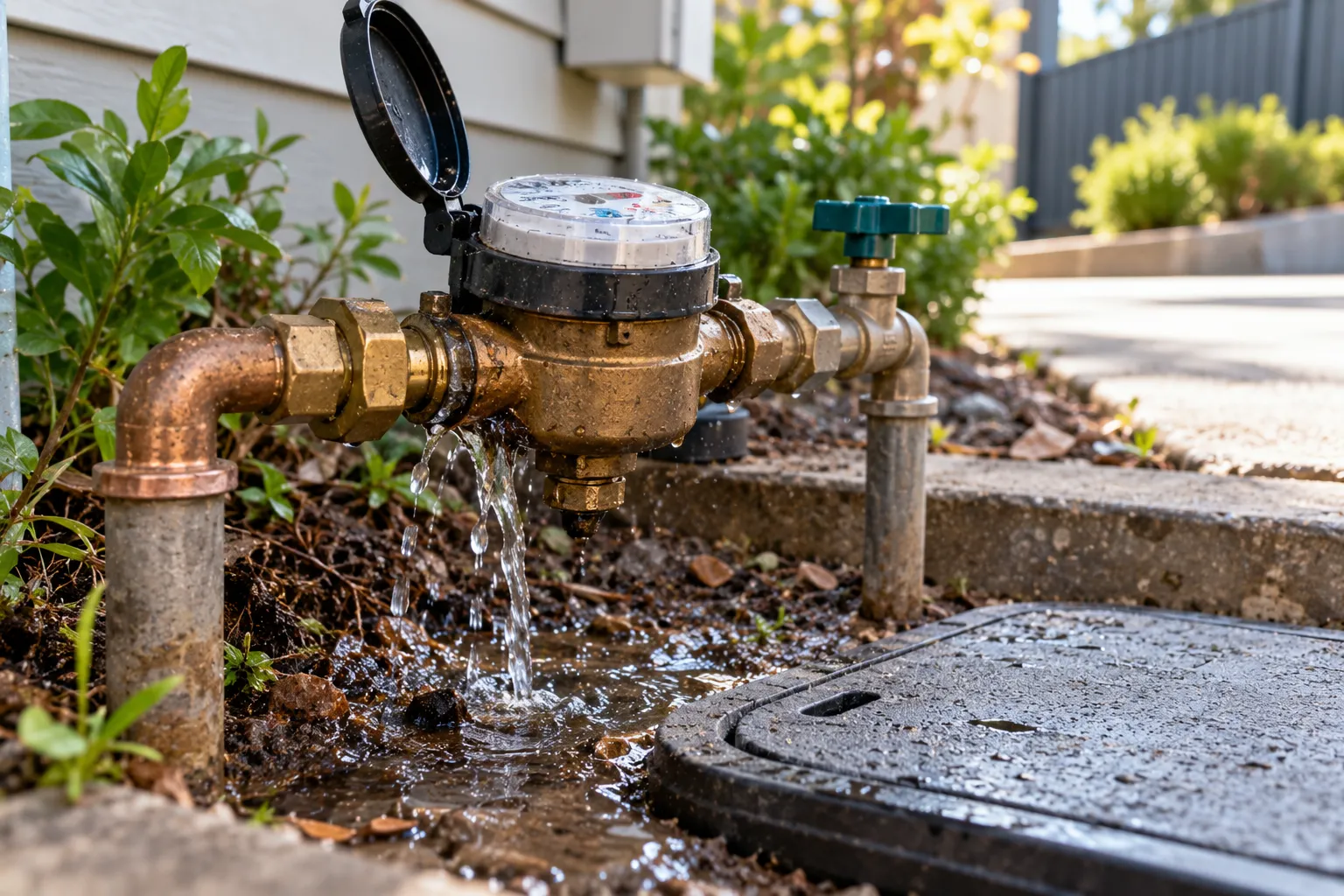
Find the device. Usually in a pit or on a riser at or near the property boundary, close to the water meter.
Check the last test date on the tag, and find the last test report in your records. No report means treat it as untested.
Call your water corporation and ask what is registered against your property. They hold the authoritative record.
Book a test with someone holding the backflow endorsement, and confirm who lodges the report within 20 days.
Put it on an annual reminder in the same month, and keep the reports together with your other compliance records.
If the device is inaccessible, deal with that now rather than at the next test. Relocating or re-housing a device is a planned job once. Discovering it cannot be tested is an urgent job every year.
Talk to a Licensed Plumber in Melbourne
If you are fitting out commercial premises, do not know what is registered against your property, or have a device sitting somewhere it cannot be properly tested, those are all worth sorting before a notice arrives. Plumb Construct works with commercial sites across Melbourne and can identify the hazards on your premises, install the required device, and coordinate the annual test with a backflow-endorsed tester so the report is lodged on time.
📞 0424 932 737
📧 [email protected]
📍 Melbourne, VIC
📩 Request a Quote: Contact Page
Related Plumbing Services
Frequently Asked Questions About Backflow Prevention and RPZ Testing
How often does a backflow prevention device need testing in Victoria?
At intervals of no more than 12 months from commissioning, or at whatever interval your water corporation determines. The part owners more often miss is what follows: the test report has to reach the water corporation within 20 days of the test. A device tested on time whose report was never lodged counts as untested in the corporation’s records.
What is an RPZ device and when do I need one?
RPZ stands for reduced pressure zone, and in regulatory terms it is a high hazard testable device in accordance with AS 2845 Part 1. You need one where your property carries a high hazard rating, meaning a hazard with the potential to cause death. Where the water corporation approves it, a registered break tank or registered air gap can be used instead. Medium hazard properties need at least a double check valve.
Who is allowed to test a backflow prevention device?
Only a plumber registered or licensed specifically in backflow prevention with the Victorian Building Authority may commission and test one. It is a separate licence class that most plumbers do not hold. Installation is different: a VBA-licensed water supply plumber may install the device. When booking an annual test, ask about the backflow endorsement by name.
What happens if I do not get my backflow device tested?
Water corporations list failure to carry out tests or maintain a containment device as an example of non-compliance where the water supply may be disconnected. More generally, where an owner does not comply with a notice, the corporation may disconnect the supply, or do the work itself and recover its reasonable costs under the Water Act 1989. For most businesses the disconnection risk is the one that matters.
Do I need backflow documentation before my new premises gets water connected?
Yes. Consent to connect is granted only after the backflow documentation is completed and received by the water corporation, and the owner or agent has to complete a registration or acceptance form agreeing to maintain and test the device. Note also that a new non-residential development with no known hazard or business activity is automatically assigned a high hazard device, so telling the corporation what the premises will be used for can change what you have to install.
Explore More
- All Posts
- Business & Specialty
- Costs & Guides
- Emergencies
- Fixes & Repairs
- public