Why Pipes Burst in Hot, Dry Weather in Melbourne
Burst pipes are usually blamed on old pipework or high water pressure, and both play a part. The weather matters too. When the ground dries out in hot weather, the clay soil under much of Melbourne shrinks and moves, and buried pipes crack at their weakest point. This spring is forecast to be warmer and drier than usual, so it is a good time to check your home before the busiest months arrive.
How Hot, Dry Weather Causes Burst Pipes
Clay soil holds water. As it dries, it shrinks, and when rain returns, it swells again. A pipe buried in that soil gets pulled one way during a dry spell and pushed back the next time it rains.
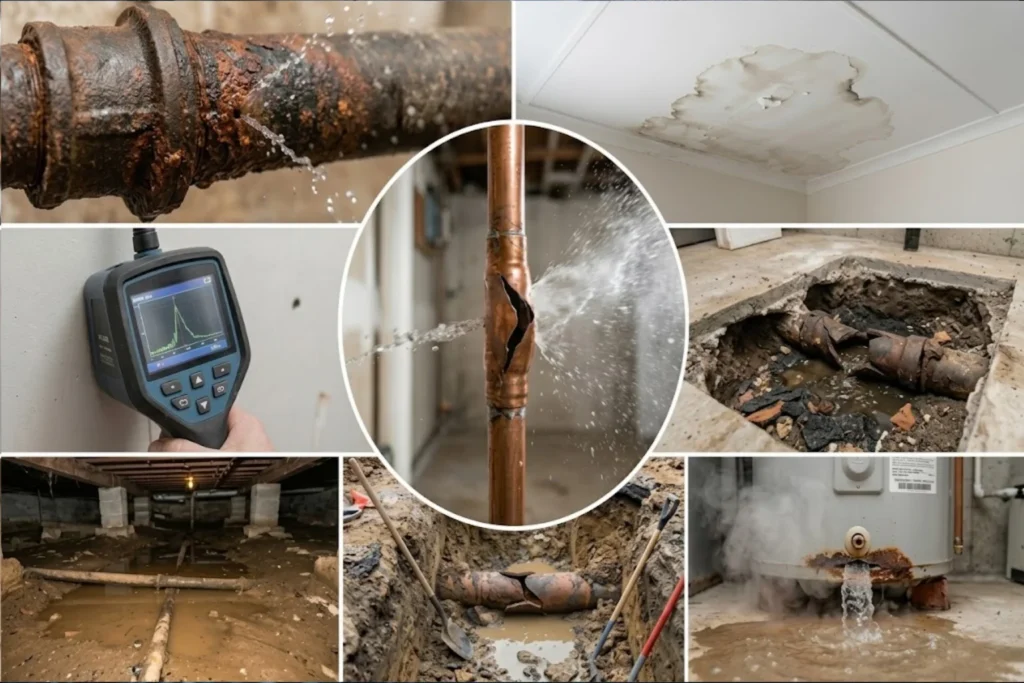
Over a few seasons, that movement strains joints, fittings and older pipe walls. A pipe that has already lost thickness to corrosion, or a joint that was never quite tight, gives way first. It usually starts as a small crack, and normal mains pressure does the rest.
Why Melbourne's West Sees More Burst Pipes
Large parts of western Melbourne sit on basalt clay that engineers class as highly reactive, which means it shrinks and swells more than most soils. A 2007 study of pipe failures across City West Water’s network, now part of Greater Western Water, measured the effect (read the study).
- 67% of the network’s pipes were laid in reactive soil.
- Those pipes accounted for 75% of failures.
- More failures were recorded in January, February and March than in the cooler months.
That research looked at the water company’s mains, not household pipes. The same soil movement still acts on the copper, galvanised steel and plastic pipes running from your meter to the house.
This year the soil is likely to dry out early. The Bureau of Meteorology’s outlook for October to December 2026 points to below average rainfall and unusually warm days and nights across south-eastern Australia.
Which Homes Are Most at Risk
Older Homes in Hoppers Crossing
Most homes in Hoppers Crossing are now 35 to 50 years old, and many still have their original galvanised steel water pipes. As we explain on our Hoppers Crossing plumbing page, that pipe corrodes from the inside, which thins the wall and lowers water pressure. A thinned pipe in moving clay is a weak point once the soil starts to dry.
Newer Estates in Wyndham Vale
Homes in newer estates have copper or plastic pipes in much better condition, so the risk comes from the ground instead. Service trenches are backfilled after the build and can keep settling for years. Driveways, paths and garden beds added later also change how the soil around a pipe wets and dries.
A fitting pulled slightly out of line can leak for months before it fails. If you are in one of the newer streets, our Wyndham Vale plumbing team can check the line from the meter to the house.
Homes With Large Trees Near the Water Line
Trees pull a lot of moisture out of clay in hot weather, so the soil near a large tree dries and shrinks faster than the rest of the yard. If your water service runs past a big tree or a garden bed you water heavily, that section of pipe moves the most.
| Type of home | Main risk in dry weather | What to check |
|---|---|---|
| Older home, 35 to 50 years old | Corroded galvanised pipe cracking as the clay moves | Whether the original water pipes have been replaced |
| Newer estate home | Fittings pulled out of line by settling trenches | The meter check below, and any damp ground over the water line |
| Home with large trees near the pipe | Soil drying and shrinking fastest near the roots | Where the water line runs in relation to the tree |
Check for Burst Pipes Early With Your Water Meter
A small crack often leaks for weeks before a pipe bursts. Your water meter is the easiest way to catch it early.
- Turn off every tap. Make sure the dishwasher, washing machine, irrigation system and toilet cisterns are not running or refilling.
- Find your water meter, usually near the front boundary, and take a photo of the numbers.
- Don’t use any water for 30 minutes.
- Read the meter again. If the numbers have moved, water is leaking somewhere between the meter and your taps.
If the meter moves, book leak detection in Melbourne before the leak grows. Thermal imaging and acoustic equipment can find most underground leaks without digging up the whole yard.
Early Warning Signs
Two signs are worth acting on before summer. The first is a sudden drop in pressure at every tap, which can mean water is escaping before it reaches the house. Our guide to low water pressure covers the other causes. The second is a damp patch in the yard or driveway that stays wet on a hot day.
For a longer list of signs, see our guide to hidden water leaks.
When to Call a Plumber
- If water is spraying, flooding or coming through a ceiling, turn off the main and call a 24/7 plumber straight away. Our guide on what to do when a pipe bursts covers the steps while you wait.
- If the meter moves with everything turned off, or a patch of ground stays wet, book a leak detection visit within a few days.
- If your home still has galvanised steel pipes, ask a plumber to check their condition before the weather heats up. Replacing a weak section early costs less than burst pipe repair in Melbourne after the damage is done.
Related Plumbing Services
If you’re dealing with a plumbing emergency right now, don’t wait call Plumb Construct’s emergency plumber Melbourne team immediately.
📞 0424 932 737
📧 [email protected]
📍 Melbourne, VIC Request a Quote: Contact Page
Frequently Asked Questions About Burst Pipes in Hot, Dry Weather
Can hot weather really cause burst pipes?
Heat doesn’t burst a pipe on its own. Dry weather shrinks clay soil, the ground moves, and a pipe that is already weak cracks at a joint or thin spot. Research on Melbourne’s water network found more pipe failures in summer than in the cooler months.
Why are burst pipes more common in western Melbourne?
Much of the west sits on highly reactive basalt clay, which shrinks and swells more than most soils as it dries and gets wet again. Pipes laid in it are pushed and pulled more.
How can I tell if I have a hidden leak before a pipe bursts?
Do the meter check above. If the meter moves while no water is being used, you have a leak somewhere on your property.
Are plastic pipes safe from ground movement?
They cope better than old galvanised steel. Joints and fittings can still pull apart if the ground settles, so newer homes are not completely safe.
Explore More
- All Posts
- Business & Specialty
- Costs & Guides
- Emergencies
- Fixes & Repairs
- public