Water Pooling in Your Yard After Melbourne Rain? Who's Responsible and How It Gets Fixed
Table of Contents
- Stormwater and Sewer Are Two Different Systems
- Where Your Responsibility Ends and Council’s Begins
- What Is a Legal Point of Discharge?
- Why Melbourne Yards Flood in Summer Storms
- Common Causes of Stormwater Failure
- When Water Flows Between Neighbouring Properties
- Surface Pooling or Subsurface Failure?
- How a Plumber Diagnoses a Stormwater Problem
- Pits, Agricultural Drains and Detention Systems
- Which Council Do You Actually Deal With?
- Why Some Melbourne Properties Flood Sooner
- Frequently Asked Questions
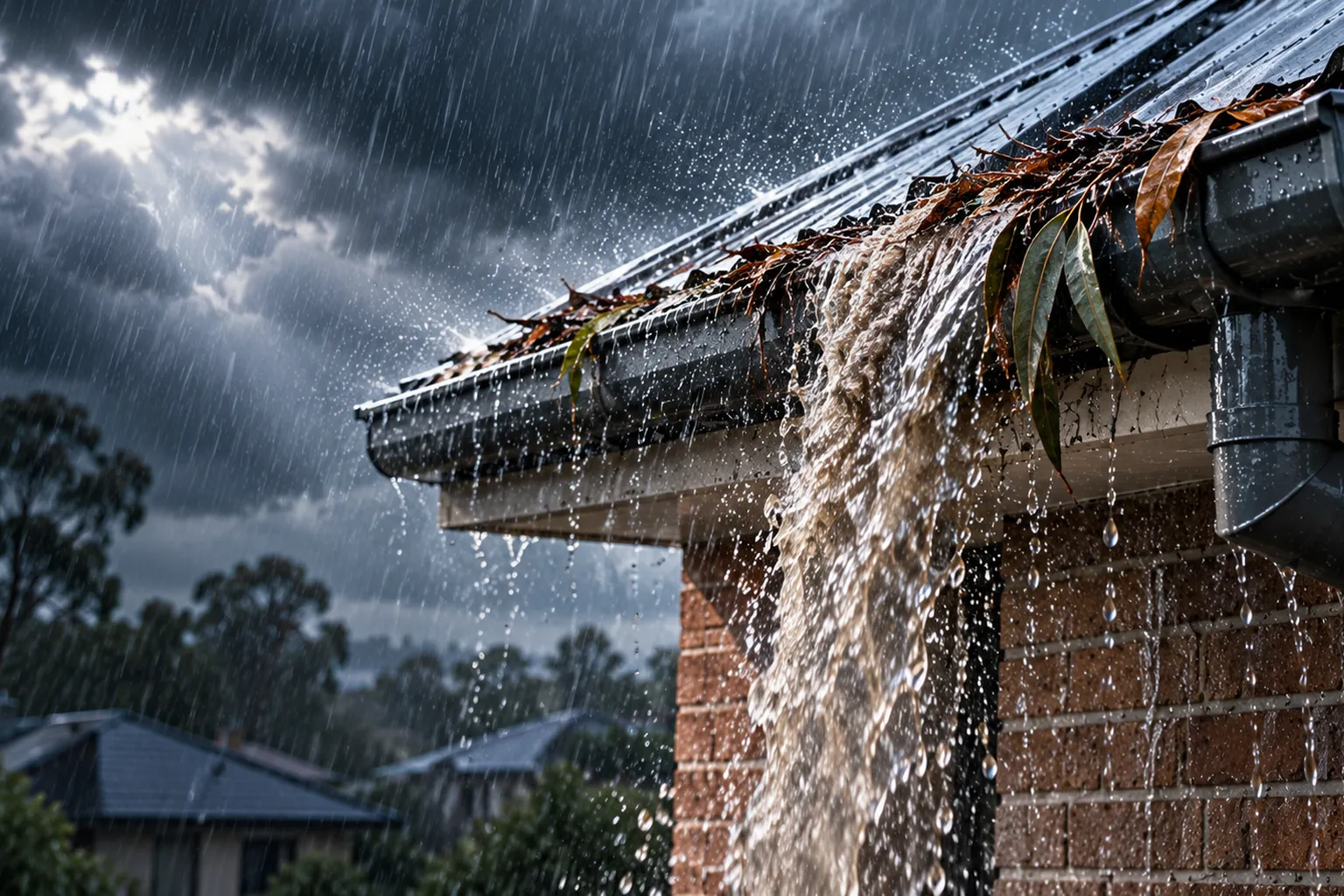
Water sitting on a lawn a day after the rain stopped is not a gardening problem. It usually means the stormwater system serving the property is no longer carrying what it was built to carry, and the water has nowhere to go except across the surface.
Most people discover this after a summer storm, when a short violent downpour arrives on ground that has been dry for weeks. The next question is always the same: is this mine to fix, or the council’s? The answer is more clearly defined than most owners expect, and it puts more of the system on the owner’s side of the line than people assume.
This guide is general information rather than legal advice. Your council or Melbourne Water is the authority for your specific property.
Stormwater and Sewer Are Two Different Systems
Stormwater carries rain from your roof, driveway and yard to the council drainage network. Sewer carries wastewater from toilets, sinks and showers to the treatment system. They are separate networks, built to different standards, owned differently and repaired differently.
This matters because the symptoms overlap. Water surfacing in a yard could be a stormwater failure or a sewer problem, and the fix is completely different. If the water smells, or the problem appears regardless of rain, you are probably dealing with a sewer issue instead, and our guide to what causes blocked drains covers that.
Everything below concerns stormwater only.
Where Your Responsibility Ends and Council's Begins
The boundary catches people out, because it sits further from the house than most owners think.
You are responsible for every part of the stormwater system on your property, and that responsibility continues past your fence. Councils across Melbourne state this consistently: the stormwater outlet running from your property, including the pipe beneath the footpath or nature strip, is private infrastructure. It only stops being yours at the point where it meets the council system.
Council is responsible for the public drainage infrastructure beyond that point, such as underground drains and kerbside systems. Melbourne Water generally handles the larger assets, including main drains, rivers and creeks.
So a blockage in the pipe under your nature strip is your repair, even though the pipe sits on public land and you may never have known it existed.
| Part of the system | Usually responsible |
|---|---|
| Gutters, downpipes and roof drainage | Property owner |
| Underground stormwater pipes within the property | Property owner |
| Surface pits, grates and ag drains on the property | Property owner |
| Pipe running under the footpath or nature strip to the connection | Property owner |
| Council underground drain, kerb and channel | Council |
| Main drains, rivers and creeks | Melbourne Water |
| Water flowing from one private property onto another | Civil matter between owners |
General guide only. Confirm the arrangement for your property with your local council.
What Is a Legal Point of Discharge?
A legal point of discharge is the location nominated by your council where stormwater from your property must enter the council drainage network. It is typically adjacent to the property boundary or at the lowest practical point of the site, and it may connect to either an above ground or an underground system.
For most established homes it was set decades ago when the property was built and nobody has thought about it since. It becomes relevant again in two situations: when you are doing building work, and when the existing connection stops working.
Under Regulation 133(2) of the Building Regulations 2018, a legal point of discharge report is required from council when building work includes a stormwater drainage system. A building surveyor will usually request it as part of the permit process, and the completed drainage must discharge to the point the report nominates rather than wherever is convenient on site.
If you are renovating, extending, or adding hard surfaces such as a driveway or a large deck, this is the piece that catches people out. More roof and paving means more runoff, and an existing connection sized for the original house may not be adequate for what you are adding.
Why Melbourne Yards Flood in Summer Storms
Melbourne’s rainfall is spread fairly evenly through the year, which means the failures show up in summer rather than winter. That seems backwards until you look at intensity rather than totals.
Winter delivers steady light rain over long periods. A partially blocked stormwater line copes with that, because water arrives slower than the restriction removes it. Nobody notices anything wrong.
A summer thunderstorm delivers the same volume in twenty minutes. Isolated storms can drop between forty and seventy millimetres in a day, particularly in the hills and outer suburbs, and rain falls unevenly across the city, with elevated eastern areas receiving well over double what the western plains record. A system running at eighty per cent capacity handles winter indefinitely and fails completely in one afternoon.
Dry ground makes it worse. Baked summer soil sheds water instead of absorbing it, so more of the rainfall reaches the drainage system and arrives faster.
Common Causes of Stormwater Failure
Stormwater problems tend to come from a small set of recurring faults, and most of them develop long before anyone sees water on the lawn.
Blocked Underground Lines
Leaves, silt and roof grit wash down the downpipes and settle in the underground line. Unlike a gutter, nobody ever inspects it. Build-up accumulates over years until capacity drops far enough that a heavy storm overwhelms it.
Tree Root Intrusion
Roots enter stormwater lines through cracks and joints, and older earthenware pipes are particularly vulnerable. Summer intensifies it, because dry ground pushes roots towards any available moisture. Suburbs with established canopy see this most, including areas covered by our Malvern plumbers.
Collapsed or Broken Pipe
Ground movement, vehicle loading over a shallow line, or simple age can crack or collapse a section. The symptom is often a soft or sunken patch of ground above the failure, with pooling that appears in the same spot every time.
Downpipes Never Connected Properly
More common than it should be, particularly in newer homes. A downpipe discharging onto the ground beside the house rather than into the stormwater line puts concentrated water against the footings every time it rains. Our Tarneit plumbers see this across newer estates, and it is usually a construction defect rather than wear.
A System Undersized for What It Now Drains
Extensions, carports, decking and paving all add runoff to a system designed for the original footprint. Nothing has failed; the system simply has more water to carry than it was built for. This is the cause people find hardest to accept, because there is nothing broken to point at.
When Water Flows Between Neighbouring Properties
This is where stormwater problems get difficult, and where owners are most often surprised by the answer.
Councils across Melbourne are consistent on it: flooding or overland flow between private properties must be resolved between the property owners. Council is not responsible for managing drainage disputes between private properties, and a resolution may require drainage works on both properties rather than one.
Two principles generally apply. You must accept natural overland flow arriving from neighbouring or public land, because water has always run that way. But you must not divert or redirect stormwater so that it floods a neighbour, and where a faulty private system causes damage next door, that is treated as a civil matter between owners.
Practically, that means a plumber’s report identifying what actually failed and where the water is coming from is worth having before any conversation with a neighbour, an insurer or a lawyer. Document the problem with dated photographs during rain rather than describing it afterwards.
Surface Pooling or Subsurface Failure?
Two different problems produce standing water, and telling them apart changes the repair entirely.
Surface pooling means water cannot reach a drain in the first place. The ground falls the wrong way, a garden bed or new paving has changed the levels, or there is no pit where the low point sits. The underground system may be perfectly healthy. The fix is grading, a new surface pit, or an agricultural drain to intercept the water.
Subsurface failure means water reaches the drain and the drain cannot take it away. Pits fill and hold water, water backs up out of a grate, or pooling appears above the line of the pipe. The fix is in the pipe.
A quick indicator: if pooling sits away from any pit or grate, it is usually a surface problem. If water rises out of a pit or sits directly over the pipe run, the underground system is the problem.
How a Plumber Diagnoses a Stormwater Problem
Stormwater lines are buried and unmapped on most established properties, so diagnosis starts with finding out where the system runs before anything is dug up.
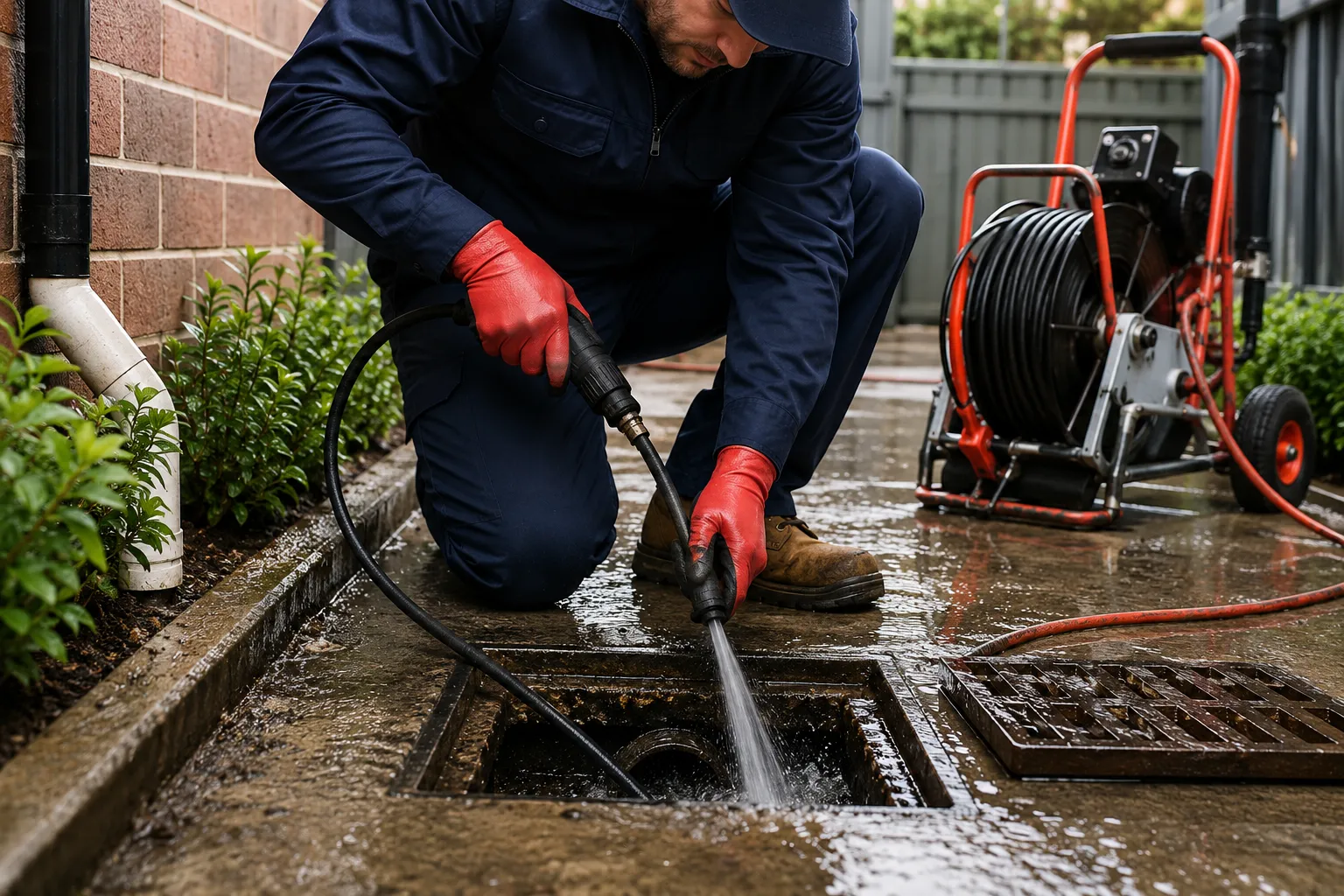
A camera inspection through an available access point shows the internal condition of the line, including root intrusion, silt build-up, cracks and collapsed sections, and it identifies where the problem sits rather than where the symptom appears. Flow testing with a hose confirms whether water is reaching the connection point at all. Where the line’s route is unknown, tracing equipment maps it before excavation rather than after.
The reason this matters financially is that a clear works once and returns next season if the cause is structural. Finding out whether you are dealing with build-up or a broken pipe is what decides between a clean and a repair, and our leak detection equipment is used for the same purpose on pressurised lines.
Pits, Agricultural Drains and Detention Systems
Fixing stormwater is rarely just clearing a pipe. The right solution depends on whether the problem is capacity, levels or a fault.
Surface Pits and Grates
A pit at the low point gives surface water an entry into the system. Simple, effective where the underground line has spare capacity, and useless where it does not.
Agricultural Drains
An ag drain is a perforated pipe in a gravel trench that collects water from saturated ground rather than from a surface inlet. It suits lawns and garden beds that stay soggy for days, and areas where water sits without an obvious entry point.
Detention and Retention Systems
Some councils require an onsite detention system for new work, which holds a volume of stormwater temporarily and releases it slowly so the council network is not overwhelmed. Where a detention system is required, it is usually specified as part of the permit process rather than chosen by the owner.
Repair or Replace the Line
Where the pipe itself has failed, the options are excavation and replacement or a no-dig relining repair, depending on the extent of damage and how accessible the line is.
Which Council Do You Actually Deal With?
Legal point of discharge information comes from your local council, and the process differs between them. Most now handle applications online, and the report is issued for a fee.
A few examples of how councils describe it. City of Melbourne requires the report where building work includes a stormwater drainage system, and applications are made online through a registered account. Yarra City Council notes that the discharge point may connect to either an above ground or underground system, and that a new connection sometimes has to be constructed. City of Port Phillip issues a certificate that a building surveyor may request during a permit application. Merri-bek directs main drain and creek issues to Melbourne Water rather than council.
If you do not know which council covers your property, it is listed on your rates notice. Search your council’s name with the phrase legal point of discharge and the application page is normally the first result. Ring them before assuming the process matches a neighbouring municipality, because the forms, fees and turnaround times are not consistent across Melbourne.
Why Some Melbourne Properties Flood Sooner
Property age and location change both the likelihood and the cause.
Period and Pre-1960s Homes
Older properties often have earthenware stormwater lines with joints that roots enter easily, systems sized for a smaller original footprint, and no record of where the pipes actually run. Areas served by our Elsternwick plumbers and Malvern plumbers have a high proportion of these.
Low-Lying and Coastal Properties
Properties on low ground or near waterways drain more slowly because the receiving system is closer to its own capacity during heavy rain. Coastal areas add groundwater and tidal influence to the picture, something our Brighton plumbers and South Yarra plumbers deal with regularly.
New Estates and Recent Builds
Newer properties usually have modern pipework, so failures are typically construction defects: downpipes not connected, pits set above the surrounding level, or falls that do not drain. Large areas of new hard surface with limited absorbent ground make small errors show up quickly.
Talk to a Licensed Plumber in Melbourne
If water is pooling on your property after rain and you need to know whether it is a surface levels problem, a blocked line or a collapsed pipe before committing to excavation, Plumb Construct’s licensed Melbourne plumbers can inspect the stormwater system and identify what has actually failed.
Call 0424 932 737
Email [email protected]
300 Plummer St, Port Melbourne VIC 3207
Related Plumbing Services
- Professional Leak Detection – locating faults without unnecessary excavation.
- Burst Pipe Repairs – for pipe failures needing urgent attention.
- Commercial and Strata Plumbing – drainage across multi-unit properties.
Related reading: why gutters overflow in heavy rain, what causes blocked drains, and what to do before an emergency plumber arrives.
FAQs - Water Pooling in Your Yard After Melbourne Rain?
Who is responsible for the stormwater pipe under my nature strip?
You are. Councils across Melbourne treat the stormwater outlet running from your property to the connection point, including the section beneath the footpath or nature strip, as private infrastructure. It becomes council’s responsibility only at the point where it meets the council drainage system.
What is a legal point of discharge?
It is the location nominated by your council where stormwater from your property must discharge into the council drainage network, usually adjacent to the boundary or at the lowest practical point of the site. A report is required from council under the Building Regulations 2018 when building work includes a stormwater drainage system.
My neighbour's water is flooding my yard. Will the council fix it?
Generally not. Councils state that flooding or overland flow between private properties must be resolved between the owners, and that they are not responsible for drainage disputes between private properties. A plumber’s report identifying the source is usually the starting point.
Why does my yard only flood in summer and not winter?
Because the damage comes from intensity rather than total rainfall. A partly blocked line copes with steady winter rain but fails when a summer storm delivers the same volume in twenty minutes. Dry summer ground also sheds water rather than absorbing it, so more runoff reaches the system faster.
Is stormwater the same as sewer?
No. They are separate systems. Stormwater carries rain from roofs, driveways and yards to the council drainage network. Sewer carries wastewater from toilets, sinks and showers. If the water smells or the problem occurs regardless of rain, you are likely dealing with sewer rather than stormwater.
Do I need council approval to fix my stormwater drain?
Routine repairs and clearing generally do not require approval. New connections, changes to the discharge point, and drainage forming part of building work usually do, and a legal point of discharge report is normally required in those cases. Check with your council before altering anything.
What is an agricultural drain?
An ag drain is a perforated pipe laid in a gravel trench that collects water from saturated ground rather than from a surface inlet. It suits lawns and garden beds that stay soggy for days after rain, where there is no obvious low point for a pit.
Can tree roots block a stormwater drain?
Yes, and it is one of the most common causes in established suburbs. Roots enter through cracks and joints, and older earthenware lines are especially vulnerable. Dry summer ground makes it worse by pushing roots towards any available moisture.
How do I find out where my stormwater pipes run?
Most established properties have no accurate record. A plumber can trace the line using camera and locating equipment, which maps the route before any excavation rather than after. Your council may hold drainage plans for the street, though these rarely show private lines.
Does home insurance cover stormwater damage?
It depends on the policy and the cause. Sudden storm events are more likely to be covered than damage arising from a system that failed gradually or was not maintained. Photograph the damage before any cleanup and check your product disclosure statement before assuming either way.
Can a downpipe cause flooding on its own?
Yes. A downpipe discharging onto the ground instead of into the stormwater line delivers a concentrated volume of water against the footings every time it rains. It is common in newer homes and is usually a construction defect rather than wear.
How urgent is water pooling near the house?
Treat it as urgent if water is reaching the subfloor, entering the building, or sitting against footings repeatedly. Damage to footings and foundations costs considerably more to repair than the drainage fault that caused it.
Explore More
- All Posts
- Business & Specialty
- Costs & Guides
- Emergencies
- Fixes & Repairs
- public