Why Is My Shower Leaking Into the Room Below? Causes, Diagnosis & Repair Explained
Table of Contents
- Is It a Leak or Just Condensation?
- Is It the Shower Head or the Shower Itself?
- Where Showers Actually Leak
- Signs the Leak Has Been Going a While
- Regrouting, Resealing or Re-Tiling: What Each One Fixes
- Failure Point and What the Repair Involves
- Why Some Melbourne Homes Leak Sooner
- How a Plumber Finds the Actual Source
- What Affects the Cost of the Repair
- Leaking Showers in Rentals and Apartments
- What to Do Before the Plumber Arrives
- Frequently Asked Questions
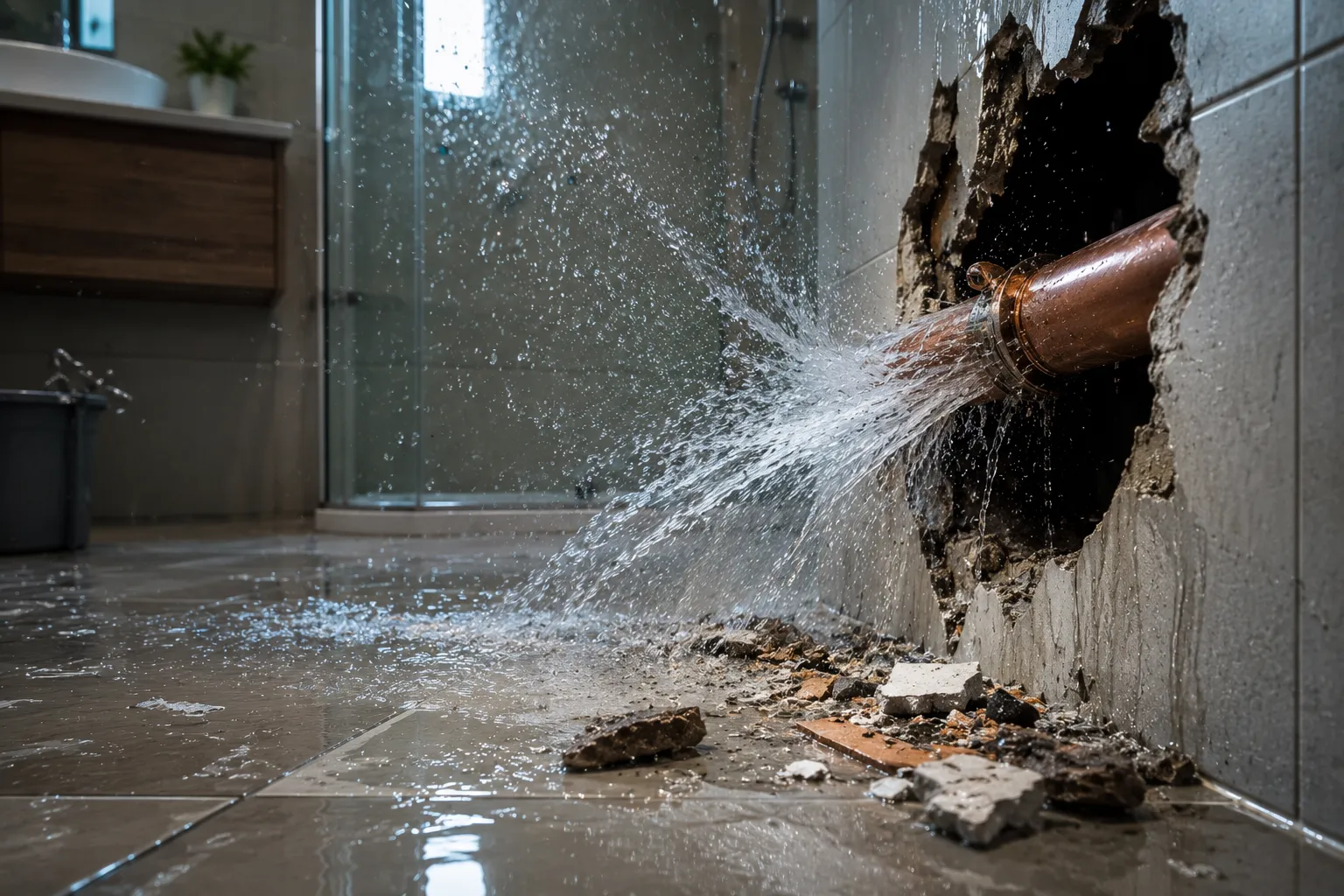
A stain on the ceiling under your bathroom usually means the shower has been leaking for a while before anyone noticed. Water rarely shows itself the same week it starts getting through. It soaks into the timber, spreads along the joists, and only marks the plaster once there is enough of it to show. By the time you can see it downstairs, the failure upstairs has often been developing for months.
The frustrating part is that a leaking shower usually looks completely normal from inside the bathroom. The tiles are intact, the water goes down the drain, and nothing seems wrong. This guide explains where showers actually leak, how to separate a genuine leak from ordinary condensation, why the most common DIY fix rarely holds, and what a plumber does to find the source before anything gets pulled apart.
Is It a Leak or Just Condensation?
Melbourne bathrooms get damp in winter whether or not anything is broken. Before assuming the worst, it is worth ruling out condensation, because the two look similar on the surface and lead to completely different repairs.
Condensation forms evenly across cold surfaces, usually on tiles, mirrors, windows and the ceiling directly above the shower. It appears during and shortly after a hot shower and dries out within an hour or two once the room ventilates. A weak exhaust fan makes it worse, and so does a bathroom with no openable window.
A leak behaves differently. The moisture shows up in one specific area rather than spreading evenly, it does not dry out between showers, and it often appears somewhere water should not reach at all: the ceiling of the room below, the skirting board in an adjoining hallway, or the carpet outside the bathroom door. If the damp patch is still there three days after you stop using the shower, you are dealing with a leak.
Quick checks that point towards a leak rather than condensation:
- The damp area stays wet for days rather than drying between showers.
- Moisture appears outside the bathroom, not just on bathroom surfaces.
- The stain has a defined edge and grows slowly rather than sitting evenly across a surface.
- Paint below the bathroom is bubbling or flaking rather than simply discoloured.
- There is a musty smell that does not clear when the room is ventilated.
If several of these apply, the next step is finding out which part of the shower has failed. For leaks that have no visible source at all, our professional leak detection service covers the same diagnostic process across the whole property rather than just the bathroom.
Is It the Shower Head or the Shower Itself?
Two very different problems get described the same way. A leaking shower head drips from the fitting itself, usually after the taps are turned off, and the water lands in the shower where it belongs. A leaking shower recess lets water escape the shower entirely and reach the structure around it. The first is a tap repair. The second is a waterproofing repair.
If the Shower Head Drips
A shower head that keeps dripping after the taps are closed almost always points to a worn tap washer or a failed cartridge in the mixer, not to the head itself. The head is simply where the water arrives. Replacing the head will not stop it. The same worn components cause dripping taps elsewhere in the house, and the repair is the same in both cases.
If Water Appears Outside the Shower
Damp skirting boards, a stained ceiling below, or moisture in an adjoining room mean water is leaving the shower recess rather than dripping inside it. Nothing about the shower head is relevant to that, and the rest of this guide covers what to do about it.
Where Showers Actually Leak
Almost every leaking shower fails at one of three points. Which one it is decides whether you are looking at a small repair or a full rebuild of the shower, so it is worth understanding the difference before anyone quotes on the work.
The Silicone and Grout Line
The silicone seal where the wall tiles meet the floor takes more movement than anything else in the bathroom. It shrinks, cracks and pulls away from the tile edge over time, and once there is a gap, water runs behind the tile instead of down it. Grout does the same thing more slowly, developing hairline cracks along the corners and around the waste.
This is the cheapest failure to fix and the easiest to spot. Run a finger along the join at the base of the wall. If the silicone feels brittle, has lifted at the edge, or has gone black and spongy, water has been getting past it.
The Shower Waste
The waste is the drain fitting in the shower floor, and it fails often because it sits at the exact point where two different materials meet. The connection between the waste and the waterproof membrane can separate, or the seal around the fitting can perish. Water then runs past the drain instead of into it.
A leak at the waste often shows up directly below the shower rather than off to one side, since the water has a clear path down through the floor at that point. A partially blocked waste makes it worse, because water pools on the shower floor for longer and finds the gap. If your shower is also draining slowly, the two problems are often connected, and the causes of blocked drains are worth reading alongside this.
The Waterproof Membrane
Underneath the tiles and the screed sits a waterproof membrane, and that is the layer actually keeping water inside the shower. The tiles are a wearing surface, not a barrier. When the membrane fails, everything above it still looks fine while water passes underneath into the floor structure.
Membranes have a service life. In bathrooms built or last renovated more than fifteen to twenty years ago, membrane failure becomes the most likely cause rather than the least. Repairing it means removing the tiles, re-waterproofing the recess and re-tiling, which is why the diagnosis matters so much before any work starts. This falls under our bathroom plumbing services rather than a simple repair callout.
Signs the Leak Has Been Going a While
Some symptoms indicate a slow leak that has already started causing damage beyond the bathroom itself. Catching these early is the difference between a contained repair and one that involves flooring, framing and the ceiling below.
Inside the Bathroom
Loose or drummy tiles are a common sign, where a tile sounds hollow when tapped because the adhesive underneath has been softened by water. Grout that stays dark long after the shower has dried points the same way. Silicone that has gone black through its full thickness, rather than just on the surface, has usually been holding moisture behind it for some time.
Outside the Bathroom
Swollen or blackened skirting boards in an adjoining room, lifting floorboards near the bathroom wall, and a musty smell in a hallway all suggest water has travelled beyond the shower. Paint bubbling or flaking on the ceiling below, rather than just a flat stain, means water has been reaching the plaster repeatedly rather than once.
Where a leak has run long enough to affect timber framing or flooring, the repair extends well past the shower and becomes considerably more expensive. That is the main reason not to wait and watch a stain to see whether it grows.
Regrouting, Resealing or Re-Tiling: What Each One Fixes
These three terms get used interchangeably, and they are not the same job. Choosing the wrong one is the most common reason a shower leak comes back.
Resealing a Shower
Shower sealing means stripping the old silicone from the internal corners and the wall-to-floor join and replacing it. It is the quickest of the three and the cheapest. Silicone is a consumable, not a permanent fitting, and most showers need resealing every few years depending on use and ventilation.
Resealing fixes a leak when the silicone has failed and everything underneath is still sound. It fixes nothing when the problem sits below the tiles.
Regrouting a Shower
Regrouting removes the old grout from between the tiles and replaces it. Tile regrouting improves the look of a tired shower and closes hairline cracks where water has started tracking in. Epoxy grout lasts longer than standard cement grout in a wet area and resists staining better.
The limit is the same as resealing. Grout is not a waterproofing layer. It slows water down and keeps the tiles in place, but the membrane underneath is what actually stops water reaching the floor structure. Regrouting a shower with a failed membrane produces a shower that looks new and leaks exactly as much as it did before.
When Neither One Works
If your shower has already been regrouted or resealed once and is leaking again, the membrane is the likely culprit and a second attempt will produce the same result. What usually happens is that the leak stops for a few weeks, everyone assumes it is fixed, and then the stain reappears in the same place. That cycle can repeat two or three times over a year while water keeps reaching the floor.
At that point the repair means removing the tiles, re-waterproofing the recess and re-tiling. It is a significantly bigger job, which is exactly why the diagnosis needs to happen before anyone commits to the cheap option twice. Our bathroom plumbing team handles both the diagnosis and the rebuild.
Failure Point and What the Repair Involves
| Failure point | How to spot it | Typical repair |
|---|---|---|
| Silicone seal | Cracked, lifted or blackened seal at the wall-to-floor join | Strip and reseal, minor work |
| Grout | Hairline cracks in corners and around the waste | Regrout affected areas |
| Shower waste | Damp appearing directly below the shower, slow draining | Reseal or replace the waste fitting |
| Waterproof membrane | Leak returns after regrouting, drummy tiles, older bathroom | Remove tiles, re-waterproof and re-tile |
| Structural damage | Swollen skirtings, soft flooring, spreading ceiling damage | Shower rebuild plus repairs beyond the bathroom |
Why Some Melbourne Homes Leak Sooner
The age and type of the building changes how likely a shower leak is and what usually causes it. Across the suburbs we work in, the pattern is fairly consistent.
Period and Pre-1960s Homes
Bathrooms in older homes have often been renovated once or twice, and the quality of the waterproofing depends entirely on when that work was done and who did it. Some were tiled directly over timber floors with no membrane at all. Established suburbs with a high proportion of period housing see this regularly, including the areas covered by our Malvern plumbers, Elsternwick plumbers and Brighton plumbers.
Apartments and Converted Buildings
Apartments concentrate the consequences. A shower leak on an upper floor affects someone else’s ceiling, which turns a maintenance job into a dispute about who pays. Converted warehouses and high-density buildings often have bathrooms built over concrete slabs where water travels a long way sideways before it appears. Our South Yarra plumbers and Collingwood plumbers attend these regularly.
Newer Estates and Recent Builds
New does not mean immune. Shower leaks in recently built homes usually trace back to workmanship during construction rather than age, and they often appear within the first few years while the builder’s warranty still applies. If your home is relatively new, it is worth checking your warranty position before paying for the repair yourself. Our Tarneit plumbers see this pattern across newer estates.
How a Plumber Finds the Actual Source
Water does not travel straight down. It runs along the top of the waterproof membrane, follows the fall of the floor, and moves sideways along bearers and joists before it finds somewhere to drop through. A stain in one corner of the ceiling below can easily originate from the opposite side of the shower above.
Staged Water Testing
A proper diagnosis starts by isolating the source rather than guessing. The shower is tested in stages: water on the walls only, then the base flooded with the waste blocked, then the waste connection checked separately. Each stage rules out one failure point, and the stage that produces moisture below is the one that has failed.
Moisture Meters and Thermal Imaging
Where staged testing does not settle it, moisture meters map how far the water has spread through the floor and wall structure, and thermal imaging traces the water path without cutting anything open. The same equipment is used for hidden water leaks elsewhere in the house, which are often first noticed the same way: a stain with no obvious source.
Getting this right matters financially. Resealing a shower with a failed membrane wastes the money and the leak continues. Rebuilding a shower that only needed new silicone wastes considerably more.
What Affects the Cost of the Repair
There is no single price for fixing a leaking shower, because the work ranges from an hour of resealing to a full recess rebuild. These are the factors that move the number.
- Which component has failed. Silicone and grout repairs sit at the low end. Membrane failure requires tile removal, re-waterproofing and re-tiling.
- Whether the damage has spread. Water that has reached framing, flooring or the ceiling below adds carpentry and plastering to a plumbing job.
- Tile availability. Matching tiles in an older bathroom is often impossible, which sometimes turns a partial repair into a full retile for appearance reasons.
- Access. Ground floor bathrooms over a subfloor are easier to inspect than an upper floor slab in an apartment building.
- Whether it is an emergency. Active water damage handled after hours through our emergency repair service costs more than a scheduled booking.
The single biggest cost variable is how long the leak has been running. Everything else is secondary to that.
Leaking Showers in Rentals and Apartments
Who arranges and pays for the repair depends on how you occupy the property, and getting this wrong delays the work while the water keeps running.
If You Rent
In Victoria, repairs to the property structure and fixtures are generally the rental provider’s responsibility. Report the leak in writing as soon as you notice it and keep a copy. Delayed reporting can complicate who bears the cost of the resulting damage, particularly if the ceiling below is affected.
If You Own an Apartment
In a strata building, responsibility depends on how your Plan of Subdivision defines the boundary between common property and lot property. In most Victorian buildings the waterproofing membrane and tiles sit within the lot, which means the owner rather than the Owners Corporation usually pays. A plumber’s report identifying which component failed is normally what an Owners Corporation needs before agreeing to anything.
Where a building has recurring water issues across multiple units, our commercial and strata plumbing work covers scheduled inspections rather than repeated one-off callouts.
What to Do Before the Plumber Arrives
- Stop using the shower if another bathroom is available. Every use adds water to a structure that is already wet.
- If it is your only bathroom, keep showers short and squeegee the walls and floor afterwards.
- Photograph the ceiling stain with something in frame for scale, then take a second photo a few days later. A stain that grows between photos shows the leak is active rather than historical.
- Do not paint over the stain before the inspection. Covering it removes the clearest indicator of where the water is arriving.
- Run the exhaust fan during and after every shower and leave the door open afterwards.
- Move stored items out of the room below if the ceiling is actively wet.
If water is running rather than seeping, or the ceiling below is sagging, treat it as urgent and read our guide on what to do before an emergency plumber arrives.
Talk to a Licensed Plumber in Melbourne
If your shower is leaking into the room below and you need to know whether it is the seal, the waste or the membrane before committing to a repair, Plumb Construct’s licensed Melbourne plumbers can trace the source and tell you exactly what the shower needs.
Call 0424 932 737
Email [email protected]
300 Plummer St, Port Melbourne VIC 3207
Related Plumbing Services
- Professional Leak Detection – locating hidden leaks without unnecessary demolition.
- Bathroom Plumber – shower repairs, waterproofing and bathroom fixtures.
- Burst Pipe Repairs – for active leaks causing damage right now.
Related reading: hidden water leak warning signs, the real cost of a leaking tap, and what causes low water pressure.
FAQs - Why Is My Shower Leaking Into the Room Below?
How do I know if my shower is leaking or if it is just condensation?
Condensation appears evenly across cold surfaces during and after a shower and dries within an hour or two. A leak stays damp in one specific spot, does not dry out between showers, and often shows up somewhere water should not reach at all, such as the ceiling below or a hallway skirting board.
Is a leaking shower covered by home insurance?
It depends on the policy and the cause. Many policies cover sudden damage caused by an escape of water but exclude gradual deterioration, and a failed waterproof membrane is often treated as wear rather than a sudden event. Damage to the ceiling below is sometimes treated differently from the cost of fixing the shower itself. Check your product disclosure statement and speak to your insurer before booking work.
Can I just regrout the shower myself?
Regrouting is reasonable if the grout is genuinely the problem and the bathroom is relatively new. If the shower has already been regrouted once and is leaking again, or the bathroom is more than fifteen years old, the membrane underneath is the more likely cause and regrouting will not stop the leak.
How often should a shower be resealed?
Most showers need the silicone replaced every few years, sooner in a bathroom with heavy use or poor ventilation. Resealing is maintenance rather than repair, and doing it on schedule is far cheaper than waiting until water has been getting behind the tiles.
Can I regrout a shower myself?
Regrouting is within reach for a confident DIYer if the only problem is cracked grout in a relatively new bathroom. It will not stop a leak caused by a failed waterproof membrane, so it is worth confirming what has actually failed before spending a weekend on it.
Why is my shower head dripping after I turn the taps off?
That is usually a worn tap washer or a failed mixer cartridge rather than a fault with the shower head. Replacing the head will not stop it. It is a separate problem from a leaking shower recess and a much smaller repair.
Who is responsible for a leaking shower in a rental property?
In Victoria, repairs to the property structure and fixtures are generally the rental provider’s responsibility. Report it in writing as soon as you notice it, since delayed reporting can complicate who bears the cost of the resulting damage.
Does the shower need to be re-tiled to fix the leak?
Only if the waterproof membrane has failed. Silicone, grout and waste repairs are all done without removing tiles. Tile removal becomes necessary when the membrane underneath needs replacing, because it sits below the screed and cannot be reached any other way.
How long can I leave a leaking shower before fixing it?
Not long. The shower itself does not get much worse, but the structure around it does. Water reaching timber framing, flooring or the ceiling below turns a contained repair into a much larger one, and the cost difference between fixing it early and fixing it late is usually far greater than the cost of the original repair.
Explore More
- All Posts
- Business & Specialty
- Costs & Guides
- Emergencies
- Fixes & Repairs
- public